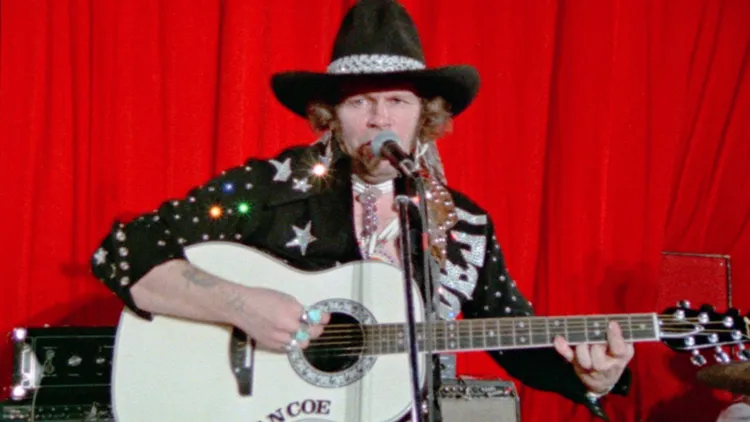
David Allan Coe, the self-proclaimed “original outlaw” of country music whose career was a tempestuous blend of songwriting brilliance, prison-hardened grit, and deep-seated controversy, has reached the end of his long, winding road. He was 86.
The “Mysterious Rhinestone Cowboy” drew his final breath at approximately 5:08 p.m. on Wednesday, April 29, according to a statement from his representative provided to PEOPLE. In a tribute that sought to encapsulate a man who lived a dozen lives in one, his representative noted: “David was a Country Music treasure and loved his fans. Most importantly, he was a true outlaw and a great singer, songwriter, and performer.”
Coe’s passing marks the departure of one of the last bridge-burners of the 1970s outlaw movement—a man who didn’t just play a character but carried the physical and psychological scars of a life spent largely on the wrong side of the law.
From Reform School to the Ryman: A Life Forged in Iron
Born in Akron, Ohio, in 1939, Coe’s journey was never destined for the mundane. By the age of nine, he was already enmeshed in the correctional system, sent to a reform school that began a two-decade cycle of incarceration. He spent the bulk of his formative years behind bars, a period he later credited with birthing his musical soul.
Upon his release in 1967, Coe didn’t head for an office; he headed for Music City. Legend has it he lived in a red hearse parked subversively in front of the Ryman Auditorium, busking for coins and trying to sell his songs to anyone who would listen. His 1970 debut, Penitentiary Blues, served as a raw, visceral introduction to his style—a blend of folk, country, and the hard-luck stories he’d gathered in the yard.
The Ghostwriter of Anthems
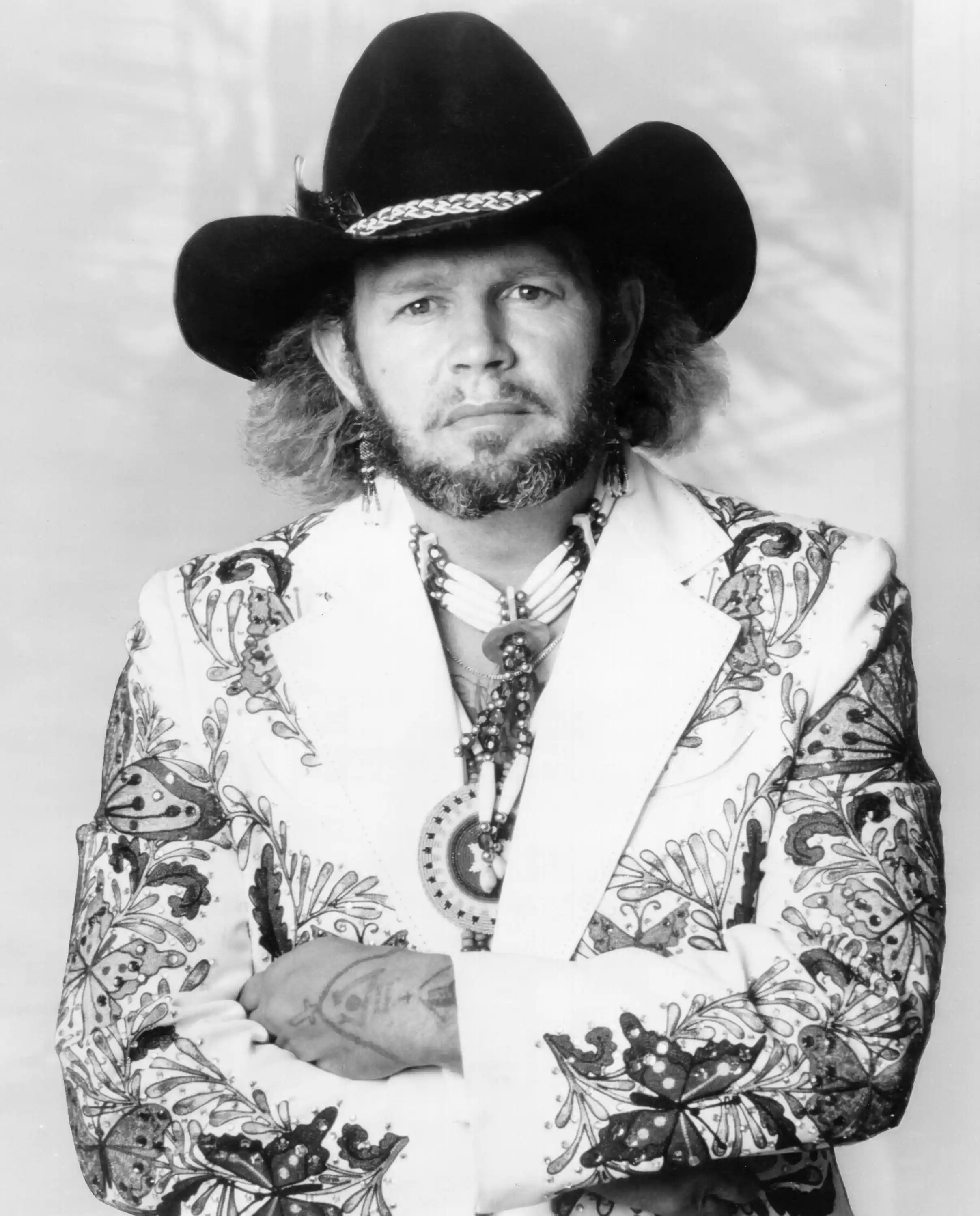
While Coe initially struggled to gain traction as a solo performer, his pen proved to be a lethal weapon in the hands of others. He became a songwriter’s songwriter, providing the fuel for some of the decade’s most iconic moments. In 1973, a young Tanya Tucker took his ethereal composition, “Would You Lay with Me (In a Field of Stone),” to the top of the charts. Four years later, he penned the definitive working-class manifesto, “Take This Job and Shove It.” Recorded by Johnny Paycheck, the track became a cultural phenomenon, a No. 1 hit, and earned Coe his sole Grammy nomination.
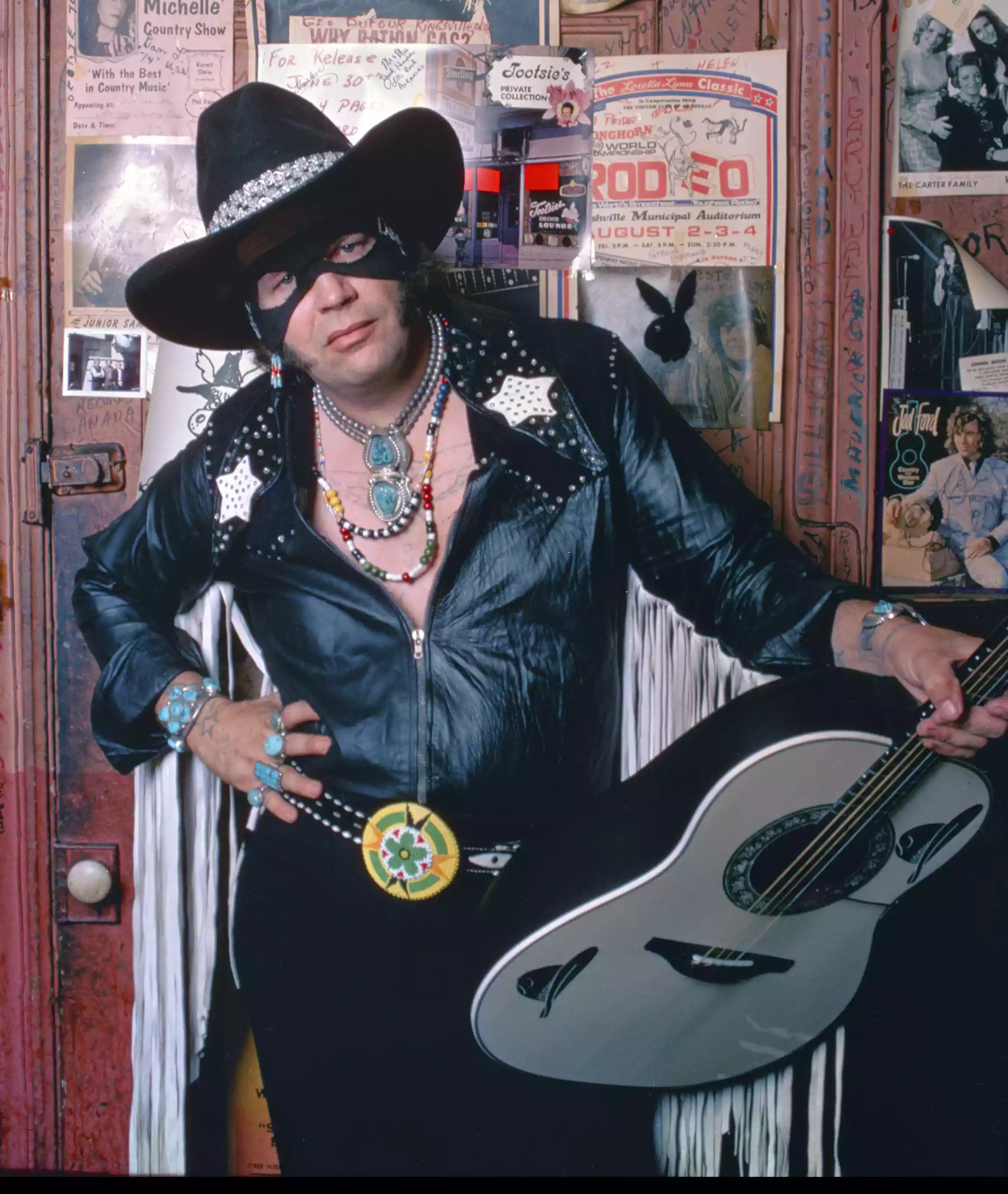
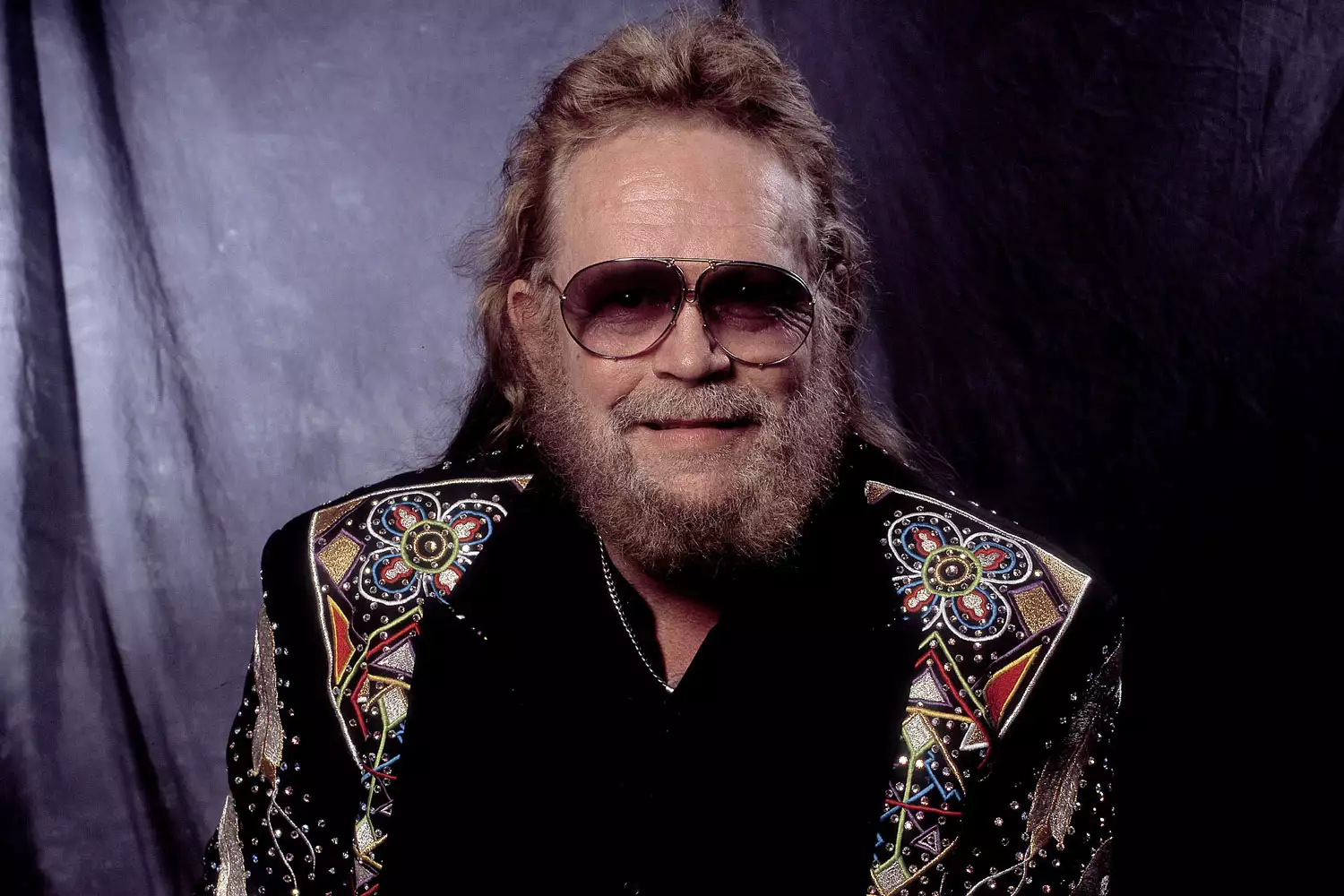
By 1974, Coe finally began to carve out his own space as a performer with The Mysterious Rhinestone Cowboy. He leaned into the theatrical, performing in a mask and rhinestone-encrusted capes—a flamboyant middle finger to the conservative Nashville establishment. His 1975 follow-up, Once Upon a Rhyme, delivered his first Top 10 hit, “You Never Even Called Me by My Name,” a song co-written by Steve Goodman and John Prine that satirized the very genre Coe was helping to redefine.
The “Original” Outlaw and the Price of the Fringe
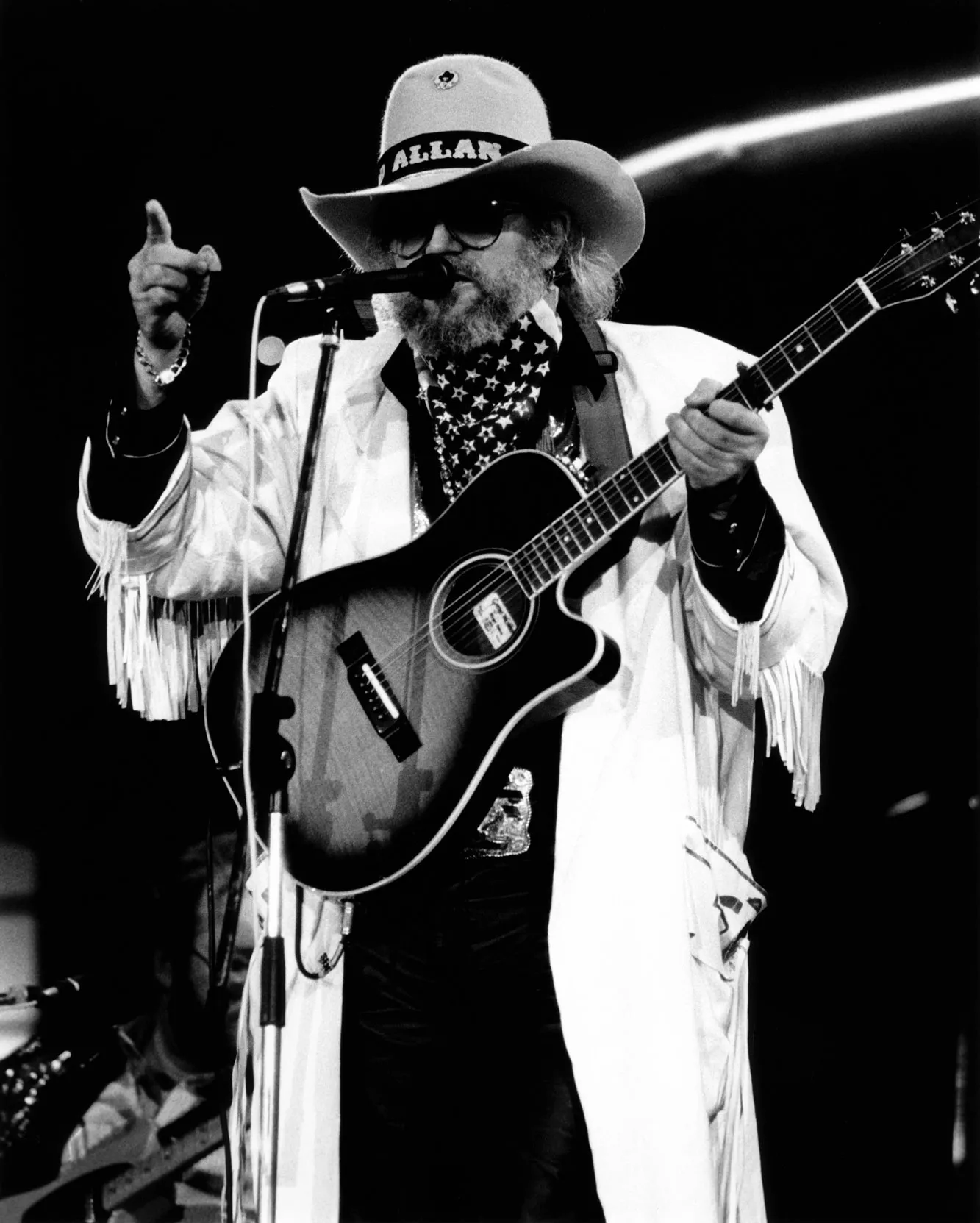
As the 1970s progressed, Coe became a foundational pillar of the outlaw movement alongside Willie Nelson and Waylon Jennings. However, while his peers ascended to the heights of pop-culture sainthood, Coe remained a creature of the fringe. He released Longhaired Redneck in 1976 and Rides Again in 1977, but the massive commercial success of a “Red Headed Stranger” eluded him.
“I did it,” Coe told the Phoenix New Times in 1993, reflecting on his outlaw pedigree with a touch of bitterness. “I was singing that stuff for years. I was living it for years. Willie, Waylon — they just got more famous. I was the original outlaw.”
He enjoyed a mid-career renaissance in 1983 with Castles in the Sand. The album featured “The Ride,” a haunting Top 10 ballad about a hitchhiker’s encounter with the ghost of Hank Williams. Coe followed this success with the 1984 album Divorced, which birthed “Mona Lisa Lost Her Smile,” his highest-charting single as an artist, peaking at No. 2.
A Legacy Cloaked in Controversy
For all his musical contributions, Coe’s legacy is inextricably linked to a history of provocation that many found unforgivable. Throughout his career, he was a frequent user of the Confederate flag and was widely condemned for songs that utilized racial slurs, homophobic tropes, and misogynistic stereotypes.
The peak of this controversy involved two “underground” albums released in the late ’70s and early ’80s—records so extreme in their use of hate speech that The New York Times described them in 2000 as containing some of the “most racist, misogynist, homophobic and obscene songs recorded by a popular songwriter.” After years of these tracks circulating as bootlegs, Coe began selling them on his website in 2000, albeit without his name on the packaging.
Coe spent much of his later years defending himself against the “White supremacist” label. In a 2000 interview with Country Standard Time, he expressed fury over the Times‘ characterization. “I’ve got a Black drummer who’s married to a White chick,” Coe argued, pointing to his dreadlocks and his friendship with boxing legend Leon Spinks as evidence of his character. “I’m the farthest thing from a White supremacist that anybody could ever be.”
He framed the offensive albums as “biker humor” created for a specific subculture during a time when he had given up on mainstream success. “I don’t apologize for these albums, because they are very funny, but don’t expect me to sing these songs at my shows!” he wrote in a letter on his website.
The Final Act
In the twilight of his life, the outlaw life caught up with Coe in the form of the IRS. In 2015, he pleaded guilty to obstructing the collection of taxes, and in 2016, he was ordered to pay nearly $1 million in back taxes and penalties.
His personal life was as complex as his discography. Married six times—and famously claiming to be a Mormon polygamist for a period in the ’80s—he wed his sixth wife, Kimberly Hastings, in 2010. He had five children: Tyler, Tanya, Shyanne, Carson, and Shelli. His relationship with his son Tyler, who led his band for years and later created the acclaimed podcast Cocaine & Rhinestones, ended in a 2013 estrangement. Tyler told GQ in 2021 that the two had not spoken in nearly a decade.
David Allan Coe leaves behind a catalog of over 40 studio albums and a reputation that remains a battlefield of conflicting truths. To some, he was the purest distillation of the country music rebel; to others, he was a man whose penchant for prejudice tarnished a towering talent.
He is survived by his wife and his children. In the end, Coe lived exactly as he wrote: part rhinestone, part penitentiary blue, and entirely on his own terms.