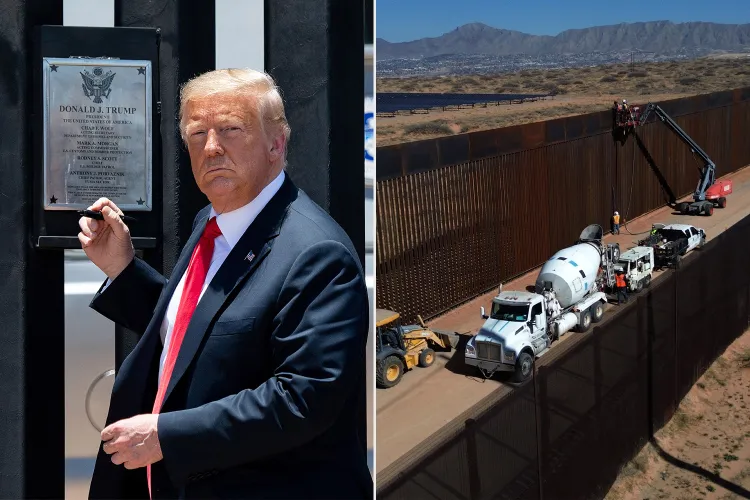
The Sonoran Desert, a landscape where time is measured in millennia rather than minutes, has been scarred by the very machinery intended to secure the nation’s future. In a startling admission issued last week, U.S. Customs and Border Protection (CBP) confirmed that a contractor, commissioned under the Trump administration’s sweeping mandate to erect a secondary “smart” wall, has severely damaged the Las Playas Intaglio—a cultural treasure nearly 1,000 years old.
For the Tohono O’odham Nation, whose ancestry is etched into the very soil of this borderland, the loss is not merely an archaeological footnote; it is a profound desecration. Tribal leaders stated that the site was decimated despite the fact that a cultural protection monitor had explicitly flagged it as an area the contractor must avoid. The destruction of this “irreparable piece of O’odham heritage,” leaders noted, has left a “scar on the hearts” of a people who have stewarded this land for thousands of years.
“This was a devastating and entirely avoidable loss,” Verlon Jose, Chairman of the Tohono O’odham Nation, said in an April 30 statement. “There is nothing more important than our history, which is what makes us who we are as O’odham.” Jose further contextualized the loss as a national tragedy: “The site is also an irreplaceable piece of the United States’ history, one none of us can ever get back.” In the wake of the incident, the Nation’s leadership has been in high-level contact with senior Department of Homeland Security (DHS) officials, demanding an absolute assurance that such negligence is never repeated.
The physical reality of the damage was brought into sharp relief by satellite imagery published by The Washington Post. The photos reveal a 60-foot gash through the heart of the 200-foot-long etching—a massive geoglyph carved into the desert floor that resembles a fish. Rep. Adelita Grijalva (D-AZ) condemned the act as a “blatant act of disrespect” and an “unacceptable violation of tribal sovereignty.”
A Warning Ignored
The incident occurred just days after a high-stakes meeting on April 21 between tribal leaders and Homeland Security Secretary Markwayne Mullin, himself a member of the Cherokee Nation. During that summit, the O’odham leaders sought to impress upon Mullin the spiritual and ecological stakes of the construction. They warned that the wall would further fracture their community, desecrate burial sites, devastate wildlife, and sever the annual cultural pilgrimage to Magdalena, Sonora.
While the Secretary reportedly expressed “understanding and sensitivity,” the bureaucratic directive remained inflexible. Tribal authorities noted that Mullin was “clear that his direction is to construct a wall on the vast majority of the U.S.-Mexico border” and that the federal government intended to move with aggressive speed.
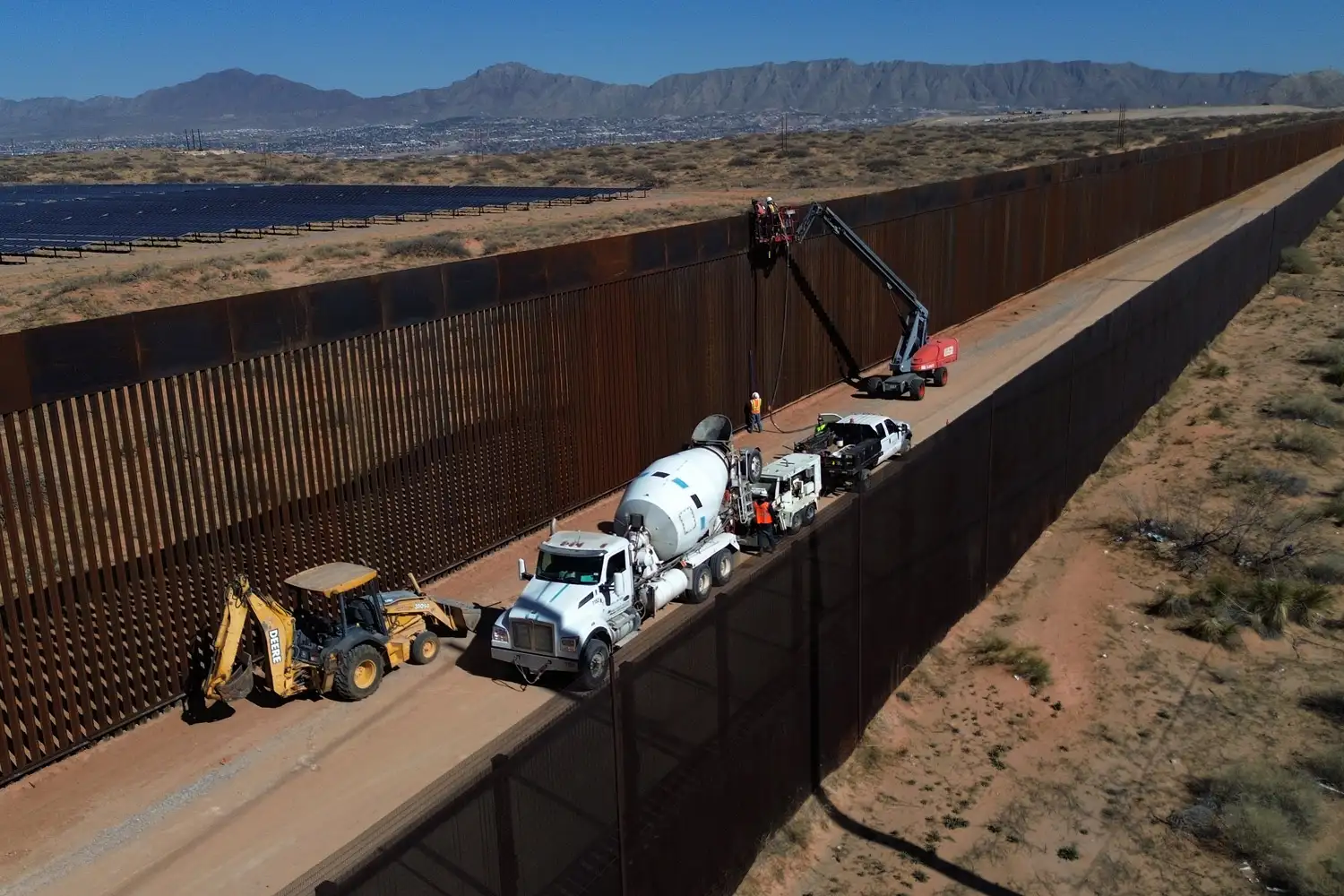
By April 23—only forty-eight hours after those warnings were delivered—the machinery moved in. CBP characterized the incident as “inadvertently disturbing” the site west of Ajo, Arizona. While CBP Commissioner Rodney Scott is reportedly engaged with tribal leaders to determine “next steps,” and the agency claims the remaining portion of the site is now “secured,” the damage is irreversible.
The Science of the Sacred
The loss is echoed by the scientific community. Local archaeologists Rick and Sandy Martynec, who have spent a combined 70 years documenting the Sonoran Desert’s secrets, helped uncover the Las Playas Intaglio in 2002. They have long warned about the vulnerability of these “line-drawings,” which were created by O’odham ancestors and have been periodically renewed by modern descendants for use in sacred ceremonies.
“There are very few intaglios in this area, so by losing part of it, it’s a big deal,” Sandy Martynec told the Post. In a 2020 amicus brief filed with the Supreme Court, the couple documented over 700 archaeological sites within just 20 square miles of the border—a density of history that makes “accidents” like this seem almost inevitable under the current construction pace.
Congresswoman Grijalva has called for an immediate halt to construction, arguing that “bulldozing a 1,000-year-old sacred site is not an accident—it’s the predictable result of rushing forward.” She framed the destruction as a permanent injury to the spiritual identity of the O’odham people, passed down through generations, and warned that this is merely the latest in a series of desecrations.
The “Smart” Wall and the Political Landscape
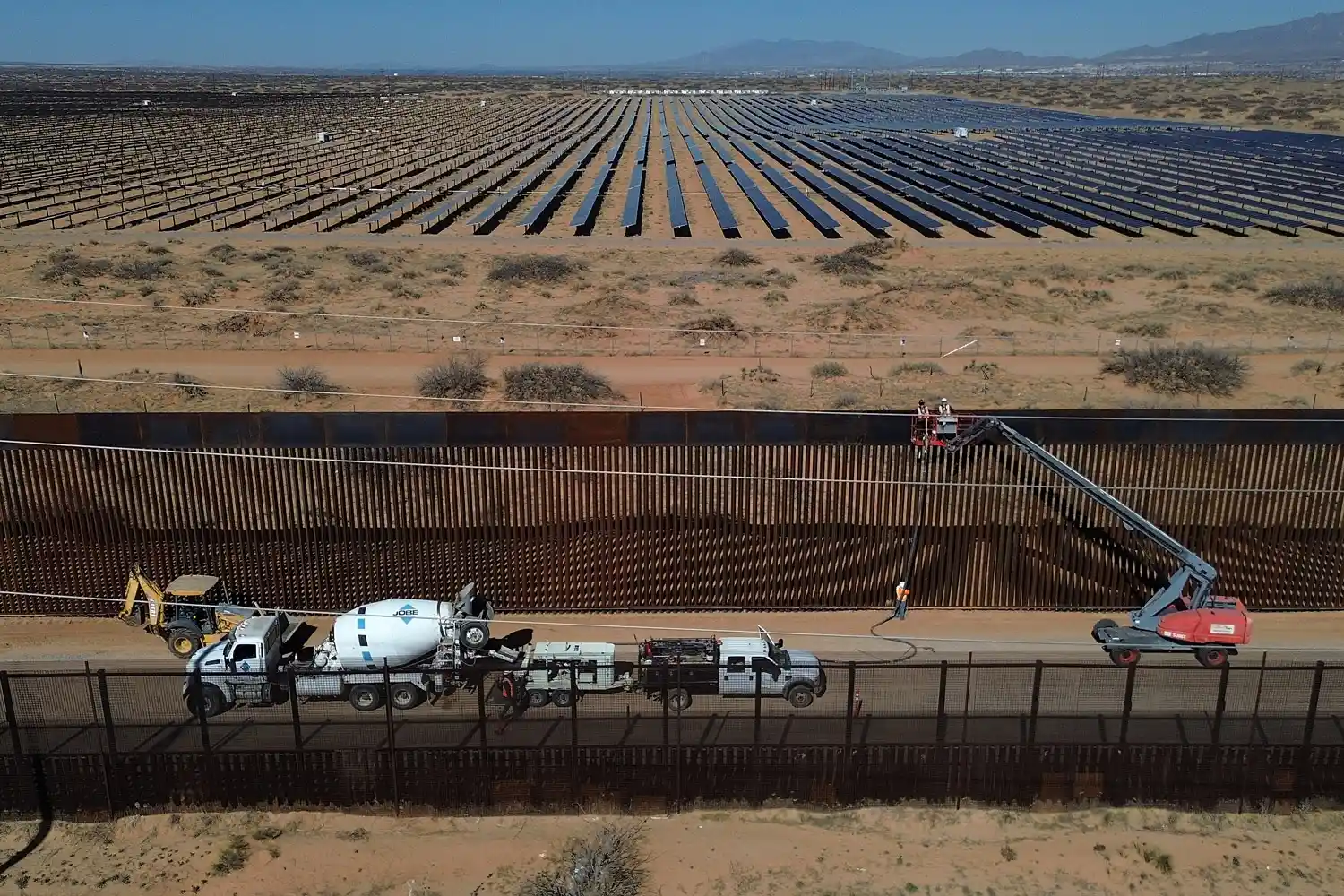
This new phase of construction is fueled by more than $46 billion from the “One Big Beautiful Bill” passed by Congress last year. The Trump administration’s “smart” wall is a high-tech evolution of the border barrier, featuring a double-layer of steel bollards, waterborne barriers, and a sprawling network of floodlights, patrol roads, and surveillance technology.
The path of this “smart” wall is set to snake through some of the most pristine wilderness in the American West, cutting across national parks and public lands in Arizona, California, and New Mexico. It serves as the physical cornerstone of President Trump’s broader agenda of restricted immigration and mass deportation.
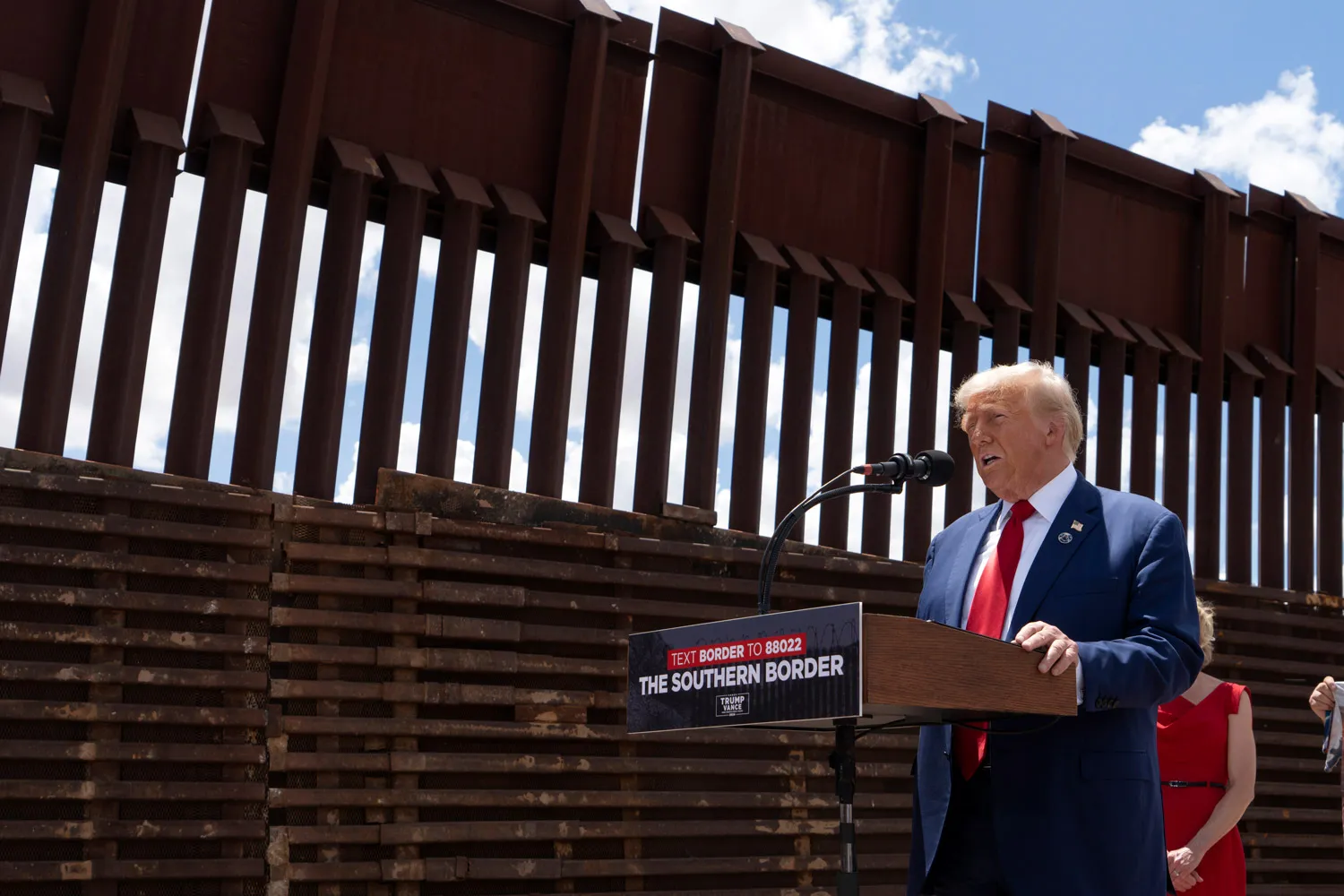
The political rhetoric surrounding the project remains as fortified as the wall itself. Following a period where parts of the DHS went unfunded due to legislative gridlock, President Trump lashed out at his critics. Speaking to reporters aboard Air Force One on March 29, he described his political opponents as “sick” people who want to “open up the wall.”
“We have to protect our border. We have to protect our wall,” the President asserted. “If it was up to them, they’d let millions of people pour into our country again… I don’t care if you’re liberal or you’re conservative, what we have now is we have a beautiful, closed border.”
But for the O’odham people, that “beautiful” border has come at the cost of a thousand years of history, leaving a gap in the desert floor that no amount of steel or technology can fill.