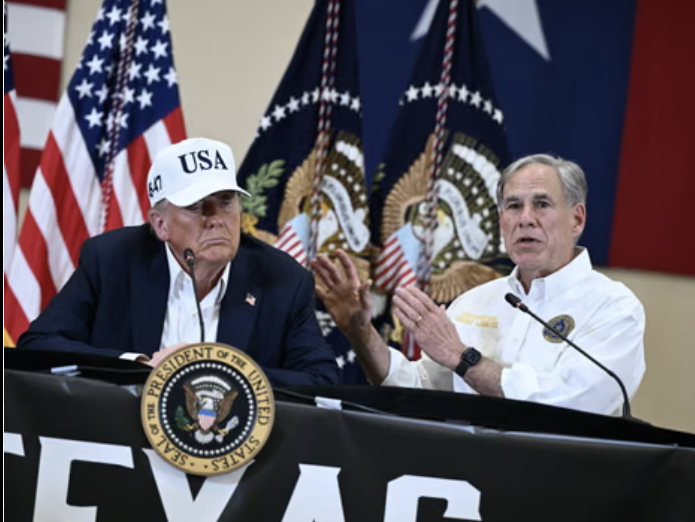
Abbott Threatens Bribery Charges, Expulsion for Texas Democrats Who Fled State Over Redistricting Fight
Texas Governor Greg Abbott escalated his confrontation with state House Democrats on Monday, threatening felony charges and removal from office after dozens of lawmakers fled the state to block a Republican-led redistricting vote.
The lawmakers—roughly 50 members of the Texas House Democratic Caucus—traveled to Chicago over the weekend, effectively denying the Republican majority the quorum needed to conduct legislative business. The move, which Democrats say was a stand against what they call a “racist mid-decade redistricting scheme,” has drawn sharp condemnation from Abbott.
“The derelict Democrat House members must return to Texas and be in attendance when the House reconvenes at 3:00 PM on Monday, August 4, 2025,” Abbott said in a statement. “For any member who fails to do so, I will invoke Texas Attorney General Opinion No. KP-0382 to remove the missing Democrats from membership in the Texas House.”
Threats of Felony Charges and Extradition
Abbott didn’t stop at expulsion. He also raised the possibility of second-degree felony bribery charges for lawmakers who may have accepted financial assistance to evade legislative penalties for their absence.
“I think they face a possibility of facing bribery charges, which is a second-degree felony in Texas,” Abbott said.
“The same could be true for any other person who ‘offers, confers, or agrees to confer’ such funds to fleeing Democrat House members.”
He added that he would use his full authority to seek extradition of any lawmaker accused of such crimes:
“I will use my full extradition authority to demand the return to Texas of any potential out-of-state felons.”
On Sunday night, Abbott explicitly warned the absent Democrats that they could face jail time and expulsion if they did not return by the scheduled Monday session.
Democrats Respond: “Come and Take It”
In response to Abbott’s ultimatum, the Texas House Democratic Caucus released a brief statement:
“Come and take it.”
The Democrats argue that the redistricting plan being advanced by the GOP would unfairly consolidate Republican power and potentially net the party five additional House seats in the upcoming midterms. They view the legislative walkout as a necessary stand against what they call “unconstitutional, racially biased gerrymandering.”
Abbott: “Real Texans Don’t Flee from a Battle”
Abbott condemned the Democrats’ move as a dereliction of duty, saying their absence undermines the legislative process and the will of Texas voters.
“Real Texans don’t flee from a battle,” he wrote.
“Rather than doing their job and voting on urgent legislation affecting the lives of all Texans, they have fled Texas to deprive the House of the quorum necessary to meet and conduct business.”
The Texas Constitution requires that at least 100 of the 150 House members be present to conduct business. With approximately 50 Democrats now absent, the legislature remains at a standstill.
Legal Path to Removal and Replacement
Abbott warned that members found to have “forfeited” their offices due to abandonment can be removed under Article III, Section 13 of the Texas Constitution, which would allow the governor to swiftly appoint replacements.
Attorney General Ken Paxton has echoed the governor’s stance, declaring the missing lawmakers “should be found and arrested no matter where they go.”
Beyond expulsion, Abbott also raised concerns that some lawmakers might be illegally soliciting or accepting funds to pay for travel or to offset fines they could incur under House rules for failing to appear.
“Soliciting funds to evade the fines they will incur under House rules is potentially a felony,” he said.
Looking Ahead
With the Texas House set to reconvene Monday afternoon, tensions remain high. Whether the absent lawmakers return—or whether the standoff leads to legal and political fallout—remains to be seen. But Governor Abbott’s latest threats mark a significant escalation in the battle over voting rights, redistricting, and the power of minority parties in state legislatures.