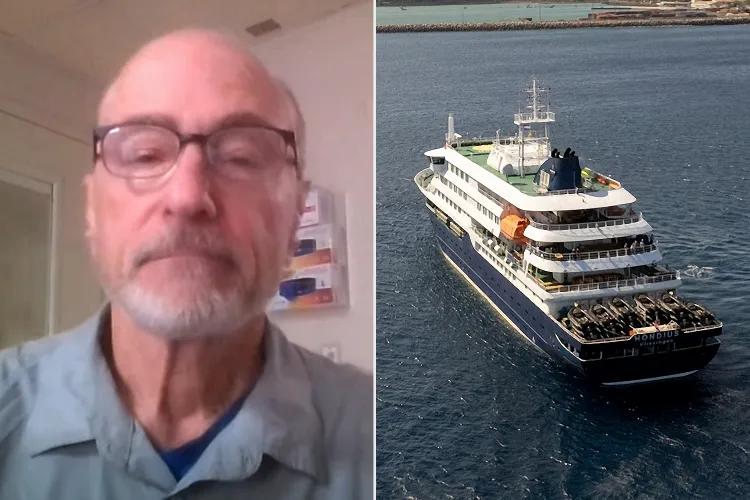
What began as a leisurely vacation aboard the MV Hondius has culminated in a high-stakes stay at the University of Nebraska’s elite biocontainment unit for Dr. Stephen Kornfeld.
The oncologist, recently identified as the American passenger at the center of a burgeoning public health story, is speaking out about the “intermediate” test results that triggered an international hand-off between Dutch authorities and the CDC. Despite the specialized isolation and the weight of the diagnosis, Kornfeld’s own assessment of his health is starkly at odds with his surroundings.
“I feel great. I feel wonderful, 100%,” Kornfeld told CNN’s Erin Burnett OutFront on Tuesday, appearing via video link from the facility.
The Good Samaritan’s Dilemma
Kornfeld’s journey from tourist to patient of interest began when the cruise ship’s own medical officer fell ill. Stepping out of vacation mode and back into his professional skin, the oncologist volunteered to assist with the treatment of other ailing passengers. It was during this period of service that the Department of Health and Human Services (HHS) flagged a “mildly PCR positive” result in its May 10 briefing.
The phrasing—clinically ambiguous and rare—has raised questions about the certainty of the infection. Kornfeld, however, provided much-needed context on the “mild” designation.
Decoding the ‘Mild Positive’
According to Kornfeld, the diagnosis isn’t a definitive “yes,” but rather a biological gray area. During the first week of May, he and several crew members underwent a series of diagnostic swabs. The samples were split and dispatched to two separate laboratories in the Netherlands, yielding a diagnostic split-decision:
-
Lab A: Returned a negative result.
-
Lab B: Returned a “faintly positive” result.
“I was told the test was intermediate,” Kornfeld explained, noting that in the world of infectious disease, an inconclusive result is often treated with the same severity as a confirmed positive. “I think since it wasn’t a negative, it’s sort of being looked at as a potential positive. The Dutch authority communicated those results to the CDC, and here I am.”
The Wait in Omaha
The transition from the Dutch coastline to the heart of the American Midwest was swift. The University of Nebraska’s biocontainment unit is one of the few facilities in the United States equipped to handle pathogens of this caliber, providing a secure environment for both treatment and observation.
For now, Kornfeld remains in a state of clinical limbo. While he remains asymptomatic, he continues to undergo rigorous testing. Definitive answers are expected within the coming days as the Centers for Disease Control and Prevention (CDC) processes the latest round of samples. Until those results return, the doctor who stepped in to help others remains the nation’s most closely watched patient.
View this post on Instagram
From the inside looking out, Dr. Stephen Kornfeld says his surroundings are deceptively ordinary. “The room is a hospital room; it looks just like a hospital room anywhere in the country,” he told CNN, noting the standard equipment and comfortable bed.
However, the illusion of normalcy ends at the threshold. To reach him, medical staff must navigate a gauntlet of biological security, passing through multiple pressurized doors and “clean rooms” designed to strip away any trace of contagion.
“I’m here to be monitored closely and this is a very secure facility,” Kornfeld explained. “If I am to get sick and spill virus, there’s no way this virus is getting out of this building.”
The human element of his care has become a study in anonymity. When healthcare workers enter his space, they do so clad in full hazmat suits, their identities obscured by heavy protective gear. “I just see a pair of eyes,” Kornfeld remarked, adding that he only recognizes his caretakers by their voices when he later speaks with them via video screens.
A Retrospective Diagnosis?
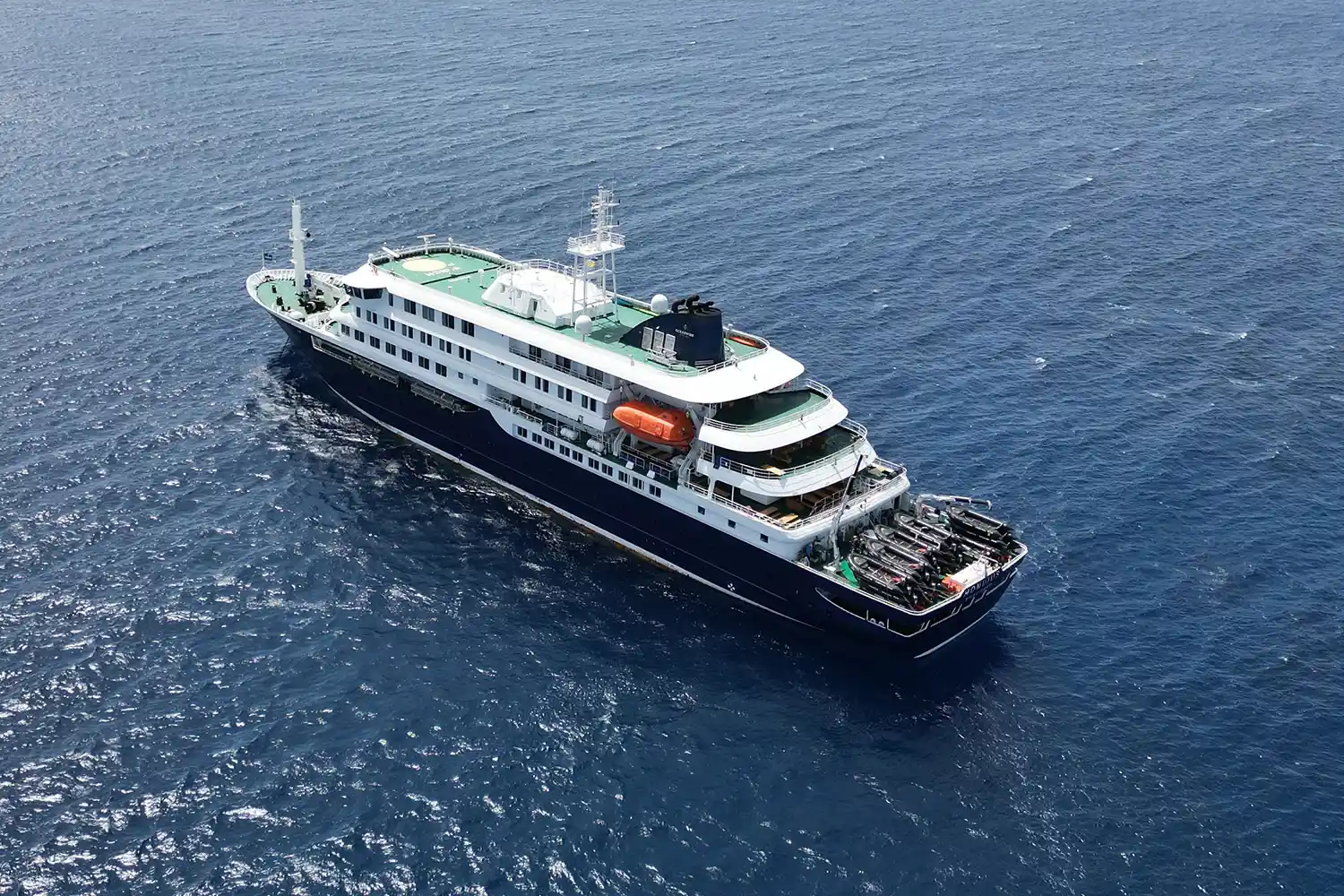
Kornfeld’s current isolation is fueled by a mysterious illness that swept through the MV Hondius in early April. He recalls a period of “ship’s flu” that affected several passengers, himself included. His symptoms—three days of drenching night sweats, chills, and respiratory distress—gave way to a crushing fatigue that lingered for over two weeks.
While he remained active on the ship, the timeline of his illness aligns with two potential points of exposure: socializing with a passenger who later died of the virus and his subsequent decision to provide medical care to the sick. Whether that “flu” was actually hantavirus remains a matter of clinical debate.
“At the time, it felt like this is just some virus,” Kornfeld said. “Now, in retrospect, there was a question—could it have been hantavirus? But it’s just speculation. There’s no way to really know.”
The 42-Day Sentinel
Despite the “weirdness” of being the sole occupant of the biocontainment unit, Kornfeld remains upbeat, passing the time on WhatsApp and chatting with his masked visitors. Yet, the road ahead is long. Health officials have recommended a 42-day quarantine—a duration necessitated by the World Health Organization’s (WHO) observation that symptoms can take up to eight weeks to manifest.
Kornfeld is not alone in this vigil. He is one of 17 American passengers who have voluntarily committed to the full quarantine period. While Kornfeld is isolated in the biocontainment wing, 15 others are being monitored in a separate unit at the University of Nebraska Medical Center.
A Global Outbreak
The stakes of this monitoring are underscored by the grim reality facing other passengers across the globe:
-
The Deceased: Three deaths have been linked to the outbreak, including an elderly Dutch couple and a German woman.
-
The Critically Ill: A French woman is currently fighting for her life on an artificial lung (ECMO).
-
The Recovering: A British man being treated in South Africa is reportedly “improving gradually.”
In a rare bit of positive news, the Department of Health and Human Services (HHS) confirmed via X that another symptomatic passenger transported to Emory University in Atlanta has tested negative for the deadly Andes variant of the virus. For Kornfeld and the remaining Americans in Omaha, the wait continues—a quiet, high-tech vigil against a silent traveler from the high seas.