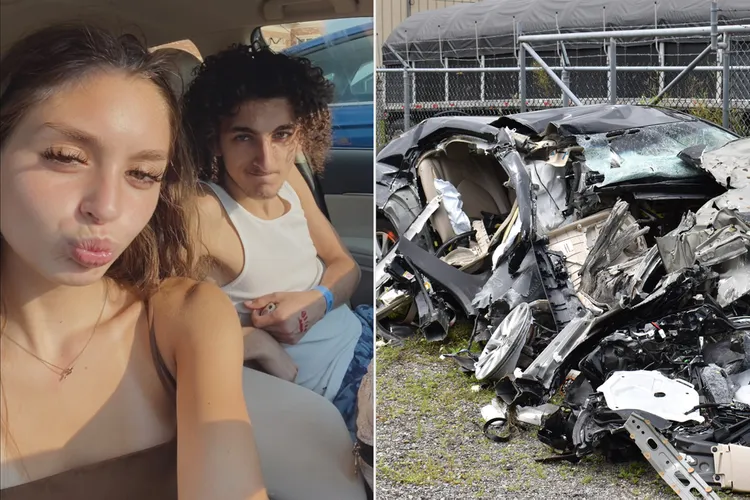
The 2022 Strongsville, Ohio crash that claimed the lives of Dominic Russo, 20, and Davion Flanagan, 19, initially bore all the hallmarks of a teenage tragedy—a late-night excursion gone horribly wrong. But as investigators peeled back the layers of the wreck, a far more sinister narrative emerged, culminating in a 2025 release of bodycam footage that solidified a reality almost too chilling to process.
Mackenzie Shirilla was just 17 when she pinned the accelerator of her 2018 Toyota Camry, intentionally rocketing the vehicle to nearly 100 miles per hour into a brick wall. The case, heavily featured in the Netflix documentary The Crash, was already a masterclass in true-crime horror. Yet, the newly public police footage reveals that the nightmare didn’t end at the impact zone; it merely shifted into a bizarre, detached psychological drama.
Here is the unvarnished chronicle of what transpired after the dust settled, as seen through the lenses of the officers who walked into “literal hell on wheels.”
1. “Oh My God—Times Three, Guys”
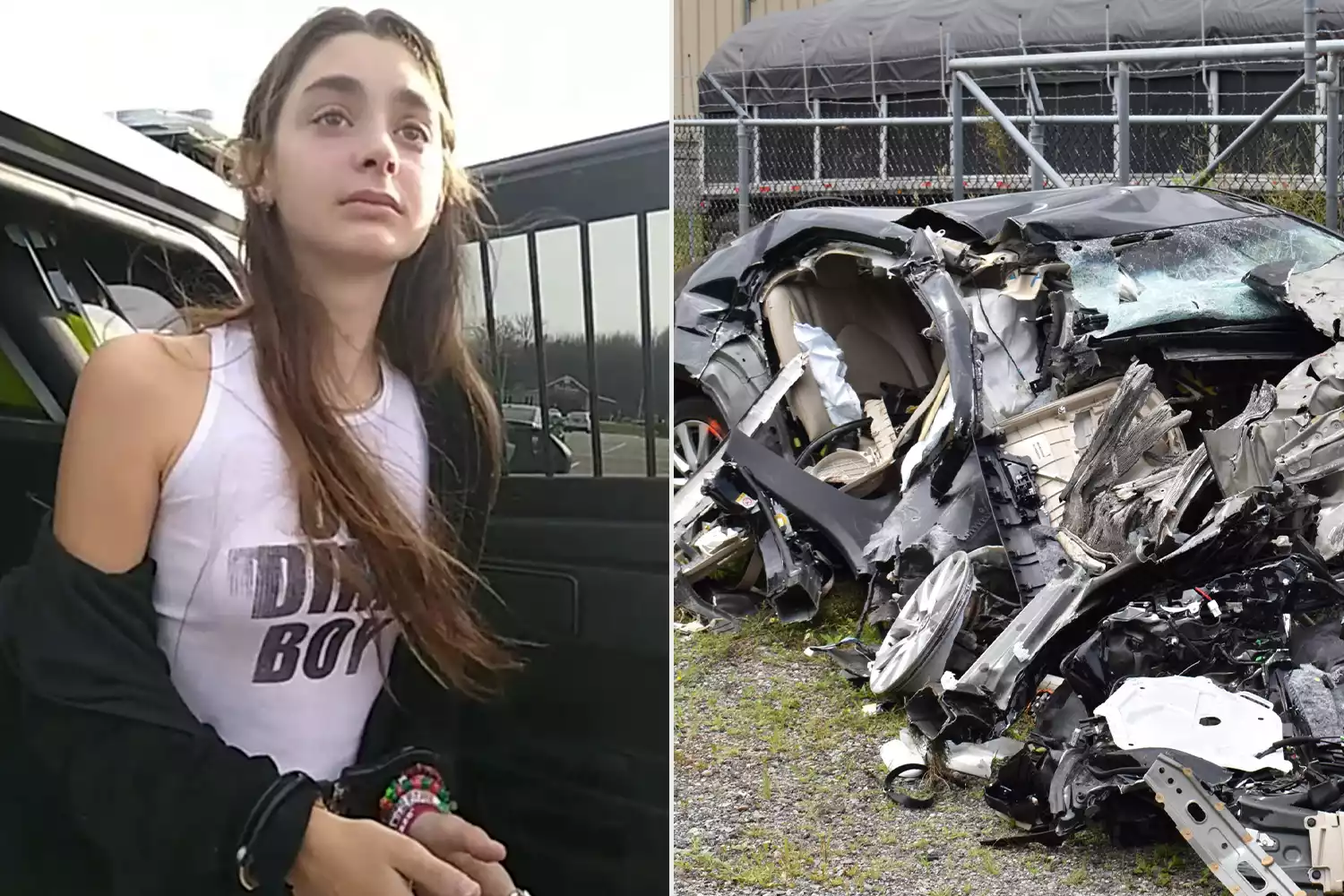
For the first responders arriving at the Strongsville site, the scene was a labyrinth of twisted metal and shattered glass. Veterans on the force openly called it the worst wreck they had ever witnessed.
In the chaotic initial moments captured on bodycam, officers can be seen frantically smashing the Camry’s windows. They managed to extract Shirilla and another occupant, operating under the assumption that only two people were inside. Then came a sickening realization.
“Oh my God,” an officer cries out, his voice cracking with sudden panic. “Oh my God — times three, guys… This is bad, guys.”
Shirilla was violently wedged beneath the dashboard, requiring rescue crews to deploy the “jaws of life” to cut her free before she was airlifted to a nearby hospital. For the young men in the vehicle, there was no saving. Looking into the mangled cabin at Russo and Flanagan, one officer quietly murmured, “Rest in peace, buddy… This is gonna just be a nightmare of a day for this whole department.”
2. A Placid Face and a Threatened Bracelet
If the crash site was a testament to physical destruction, Shirilla’s November 2022 arrest was a testament to psychological detachment. When detectives informed the teenager she was being charged with two counts of aggravated murder, her face remained entirely blank. The gravity of a double homicide charge didn’t seem to register.
What did register, however, was her jewelry.
As officers began swapping her standard handcuffs, Shirilla’s stoic demeanor cracked into a pout. “Could you please be careful taking this one off so it doesn’t break the bracelet?” she asked.
Later, during the booking process at the station, the tears finally flowed. They weren’t shed for her dead boyfriend or friend, but because police protocol dictated she remove her jewelry—pieces, ironies of ironies, that had reportedly been gifted to her by Russo.
3. The Anatomy of Grief: The Russo Family Notification
While Shirilla worried about her accessories, a few miles away, the ripples of her actions were tearing a family apart. Bodycam footage obtained by NewsNation captures the precise moment an officer and a department chaplain shattered the life of Dominic Russo’s mother, Christine.
Initially, when told there had been an accident, Christine maintained an anxious composure. But as the silence stretched, she stood up, stammering, her body beginning to violently shake. The officer gently guided her back into her chair.
The moment the words were uttered—that Dominic and Davion were dead—Christine bypassed grief and went straight into agony. She lunged from her chair, flailing her arms, her screams of “Oh God!” piercing the room in a raw display of a mother’s worst nightmare realized.
4. “God, Help Me”: Delivering News to the Shirillas
The burden of notification weighed heavily on the police. In another segment of footage, an officer tasked with updating Shirilla’s parents, Steve and Natalie, at the hospital can be heard muttering a desperate prayer to himself: “God, help me.”
At that point, the Shirillas knew their daughter had been in a severe wreck, but they believed she had been driving alone.
As the officer explained that two passengers had been in the car and had perished, the physical toll on the parents was immediate. Steve clutched his chest as if hit by a physical blow. When the officer confirmed the identity of the first victim, Natalie covered her face in sheer shock while Steve doubled over in his waiting room chair, gasping for air before dissolving into heavy weeping.
Natalie’s brain seemingly revolted against the information. She began pacing, repeating the name as if trying to force reality to bend. “Dom is dead? … Dom with the curly hair? It could be a different Dom.”
5. A “Unique Language” and the Seizure Defense
Perhaps the most bizarre footage from the aftermath involves Assistant Prosecutor Tim Troup’s notation of Shirilla’s “unique language.” When first interrogated by Detective Zaki Hazou in her hospital bed, Shirilla spoke in a rapid, quasi-gibberish dialect that observers likened to Pig Latin.
With her mother Natalie sitting bedside, the detective flatly told Shirilla she was under investigation for two counts of aggravated vehicular homicide.
Using her coded dialect, Shirilla pivoted immediately to damage control, asking her mother in the encrypted speech if they could simply tell the police she had suffered a medical seizure before the crash. Then, turning her attention back to Detective Hazou, she attempted to bargain away a double-murder investigation with juvenile logic:
“Can’t you just take my license away for like, 10 years?”
6. The Digital Breadcrumbs of Life360
While Shirilla attempted to construct a narrative of medical emergency and ignorance, the victims’ friends were quietly handing the police the digital smoking gun.
Footage utilized in The Crash shows two of Davion Flanagan’s friends sitting down with investigators, holding open the Life360 tracking app on their phones. They established the timeline: Flanagan, Russo, and Shirilla had attended a small party earlier that morning.
More damningly, the app’s telemetry data painted a precise picture of the vehicle’s final seconds. It showed Flanagan was actively using his phone at 5:35 a.m.—exactly sixty seconds before impact. It also dismantled any defense of a mechanical failure or a driver trying to regain control.
“There’s no hard braking until — like, it will show you when they hard brake,” the friends pointed out to officers, “and that was when they hit the wall.”
The friends also flagged the possibility that the group had experimented with psychedelic mushrooms earlier in the night. While toxicological panels later confirmed Shirilla had THC in her system, no psilocybin was detected.
Ultimately, it wasn’t drugs or a medical anomaly that drove the Camry into the brick wall at 100 miles per hour. It was the deliberate pressure of a foot on the gas pedal—an act that earned a unrepentant 17-year-old the judicial moniker “literal hell on wheels” and a lifetime behind bars.