For millennia, the human body has served as a canvas for a primal form of journalism—one where the headlines are etched in ink and the stories are carried for a lifetime. To look at a tattoo is to understand that it has never been merely about skin-deep aesthetics or fleeting decoration. For the bearer, it is an indelible chronicle of a memory, an anchor to a lost loved one, a testament to a brutal struggle, or the monument of a hard-won victory. These are the permanent markers of the events that reshape human lives forever.
Across shifting cultures and passing generations, tattooing has evolved into a profound medium of personal storytelling. In a hyper-connected world where billions search for a way to voice their true identity, the tattoo parlor has become a sanctuary for self-expression. Some individuals choose designs tied intricately to their passions, hobbies, or defining philosophies. Others reach for universal symbols of resilience, hope, freedom, and love. Unlike the transient trends of modern fashion, these pieces carry an emotional weight designed to withstand the erosion of time, acting as visual anchors for the chapters that define who we are.
Living Memorials: Etching Grief and Love into Skin
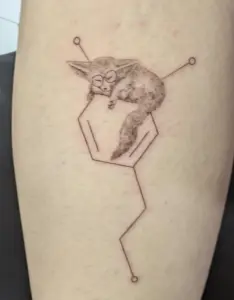
Among the most powerful beats in this subculture is the living memorial. The loss of a foundational figure leaves a fracture in the soul that never truly heals, and many find solace by translating that internal ache into external art. This isn’t about traditional iconography; it is about absolute personalization. Today, people are bypassing generic tributes to embed precise fragments of the departed into their skin: the exact replication of a mother’s handwriting, the rhythmic spikes of a father’s heartbeat from an EKG, a favorite flower, or a cherished heirloom.
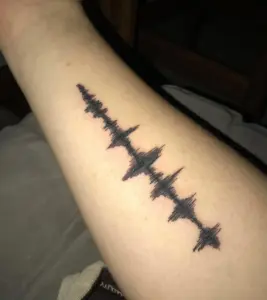
Consider the profound creativity born from grief: one individual bypassed standard portraits to tattoo the visual soundwave of their late father’s laugh. It was a brilliant, avant-garde choice—every glance at their arm didn’t just recall a face, but instantly broadcasted the echo of the joy, warmth, and vitality that man brought into the world. It is a striking example of how ink can capture poignant emotional frequencies where the spoken word fails.
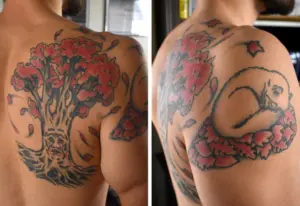
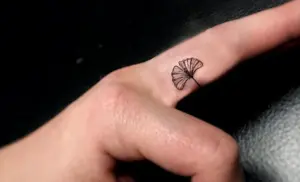
These living heirlooms frequently trace generational bloodlines. One woman chose to ink delicate ginkgo leaves upon herself—a quiet nod to her great-grandmother’s favorite plant. Over decades, that botanical affinity blossomed into a matriarchal symbol of endurance, strength, and hope, passed down like a torch from one generation of women to the next. Another individual paid homage to their grandfather through a whimsical combination of sunflowers and a pink flamingo feather, capturing his eccentric spirit and unyielding cheerfulness. Through this artistic alchemy, ordinary objects are elevated into sacred family history.
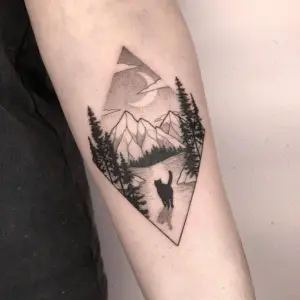
This profound bond extends seamlessly to the animals we bring into our inner circles. The grief of losing a pet can mirror the devastating weight of losing a human companion. To honor this, one person commissioned a piece depicting their late cat walking peacefully toward the afterlife—a permanent monument to years of unshakeable loyalty. Another immortalized their dog, Ghost, through a fantasy-infused design that mirrored both the canine’s unique personality and the deep, otherworldly bond they shared. These pieces stand as quiet reminders that love and connection do not care about the boundaries of species.
Battle Scars and Turning Points
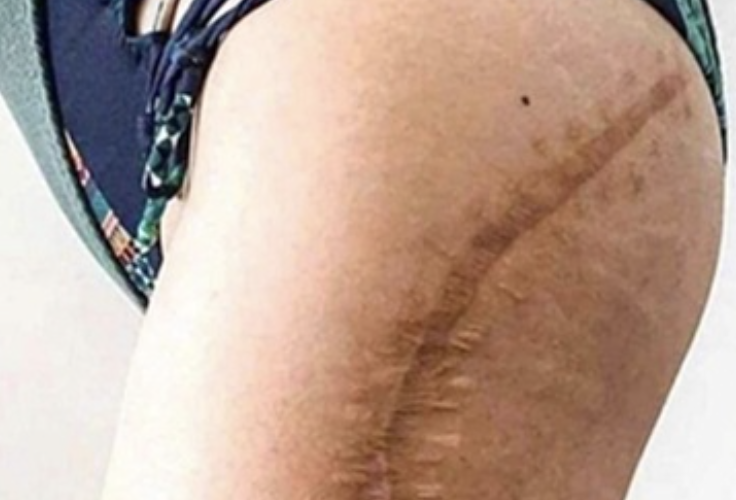
Tattoos also serve as the ultimate trophies of survival. They are frequently sought out as the final act of closure after a grueling war with chronic illness, addiction, mental health crises, or profound trauma. Following a terrifying bout with thyroid cancer, one survivor permanently marked themselves with two simple words: “I can.” It became an unyielding daily mantra of internal fortitudre. Another individual, having survived a catastrophic broken back, used ink to mark the end of their physical rehabilitation and the beginning of their emotional rebirth. These tattoos are flags planted on the summit of a mountain the wearer never thought they would survive climbing.
   THE SEMICOLON MOVEMENT
   [;] Represents a sentence an author could have ended,
       but chose not to. In the lexicon of mental health,
       it signifies the conscious choice to keep living.
In recent years, this intersection of trauma and ink has given rise to powerful global movements, none more recognizable than the semicolon. For millions battling depression, anxiety, and suicidal ideation, the punctuation mark is a badge of survival. One family famously shared their story of getting matching semicolon tattoos after rallying behind their eldest child through a harrowing psychological crisis. It became a collective vow of solidarity, a family crest of hope, and a stark reminder that even when the night is at its darkest, the story is far from over.
The Invisible Meaning and Cultural Roots
Yet, because this language is so deeply personal, its true syntax is often entirely invisible to the outside world. This reality was highlighted by a heartbreaking account of a woman who walked into a tattoo studio seeking a minimalist memorial for her miscarried baby, only to be mocked by staff members who found the simplistic design amusing. They lacked the context to see the immense grief and love woven into those few sparse lines. It serves as a cautionary tale for society: a tattoo should never be judged purely on its surface aesthetics. What looks ordinary, abstract, or trivial to a stranger is often a priceless relic of healing to the person wearing it.
This weight of meaning is not a modern invention; it is a legacy inherited from antiquity. Long before the advent of modern tattoo machines, indigenous communities across the globe used tattoo traditions as sacred markers of cultural belonging, rites of passage, spiritual protection, and ancestral lineage. While contemporary studios have expanded the craft into commercial fashion, these ancient roots still anchor the practice, reminding us that ink has always been about something far more sacred than vanity.
The Modern Renaissance: From Rebellion to Mainstream
Today, tattooing thrives as a highly collaborative discipline of artistic freedom. Elite artists function much like master portraitists or abstract painters, translating raw human emotion into breathtaking visual narratives. Whether utilizing hyper-realistic portraiture, avant-garde watercolor techniques, sharp geometric patterns, or stark typography, the process is a partnership between the client’s vulnerability and the artist’s technical execution.
| Tattoo Styles as Storytelling | Emotional Impact |
| Hyper-Realism | Captures the exact gaze of a lost loved one or a vivid memory. |
| Abstract & Watercolor | Translates complex, non-linear emotions like grief and rebirth. |
| Minimalist & Typography | Serves as a direct, unshakeable daily mantra of survival. |
This artistic evolution has fundamentally dismantled old societal prejudices. For decades, Western culture pigeonholed tattoos as the exclusive domain of the rebel, the criminal, or the societal outcast. But the cultural tides have turned completely. Walk into a modern hospital, a corporate boardroom, a university lecture hall, or a suburban elementary school, and you will find inked skin. Doctors, executives, teachers, athletes, and parents from every conceivable demographic are participating in this tradition. Their motives have nothing to do with defiance, and everything to do with identity, legacy, and emotional preservation.
Social media has accelerated this cultural shift, turning what used to be private stories into universally understood human experiences. Platforms are now flooded with the narratives behind the ink. When a video or photo detailing a recovery milestone or a tribute to a lost parent goes viral, it resonates because it taps into a universal human frequency.
Ultimately, the global phenomenon of tattooing speaks to a deeply ingrained human desire: the need to remember, to express, and to protect the moments that define us. Whether it is a monument to a parent, a quiet tear shed for a lost child, a celebration of survival, or a beacon of future hope, these designs are the enduring topography of our souls. The styles will continue to change, but the underlying heart of the craft remains immutable. These are not merely decorations. They are pieces of the human odyssey, written forever on the skin.