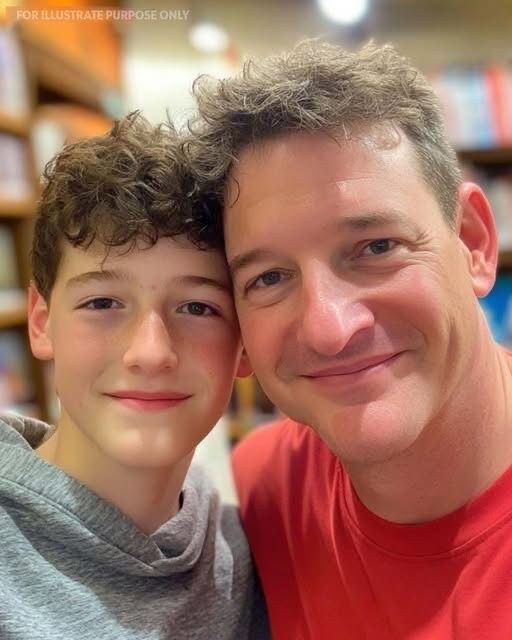
For more than a decade, I walked through a landscape defined by long shadows and the static of unanswered questions. When Lisa vanished, it wasn’t just a person who went missing; it was as if a physical piece of my world had been excised, leaving behind a jagged void that refused to knit back together. The police investigation was a carousel of hope and heartbreak that eventually ground to a halt. There were no breadcrumbs, no digital footprints, no sudden activity on a bank statement to signal a new life or a tragic end. She had simply slipped through the cracks of the world, leaving the dial of her life turned to a sudden, deafening silence.
The day the authorities sat me down to deliver their final assessment—that she was likely gone for good—was supposed to be a milestone of closure. In reality, those words were a cold comfort. They didn’t solve the puzzle; they only cemented the grief. Well-meaning friends and relatives spoke often of “moving on,” a phrase that felt increasingly foreign. How do you move on from a mystery? How do you abandon a search when your heart remains anchored to a person who hasn’t been found? Reason dictated that I let go, but there is a stubborn, irrational part of the human spirit that clings to the wreckage long after the ship has gone down.
The world, however, does not pause for the grieving. I was thrust into the dual role of a domestic architect, forced to be both father and mother to our son, Noah. He was just a small child then, unaware of the gravity of the silence filling our home. My life became a grueling rhythm of survival: the hollow quiet of sleepless nights followed by the frantic demands of early mornings and a relentless career. Every day was a tactical maneuver against despair, but Noah was the northern star that kept me from drifting. He was a tangible, breathing purpose in an era where everything else felt like smoke.
The architecture of a single-parent household is built on invisible labor and suppressed emotions. Raising him alone meant carrying the crushing weight of Lisa’s absence while wearing a mask of stability. I made it my mission to build a fortress around him, shielding him from the cold drafts of my own sadness. I wanted his childhood to be defined by warmth and security, even if the foundation we stood on was missing a primary pillar. I couldn’t give him the answers he deserved about his mother, so I gave him everything else instead. In the end, I suspect he was the one who kept me tethered to the earth.
As the years stacked up, the feverish hunt for clues eventually cooled into a quiet, dull ache. The search didn’t end so much as it was eclipsed by the daily reality of raising a boy. My focus shifted from the “why” of the past to the “how” of the future. I learned the difficult art of living without an ending—of building a meaningful life in the middle of a chapter that never quite closed.
Today, Noah stands at fifteen, a living testament to resilience. He is tall, sharp, and carries a gentle spirit that feels like a quiet echo of the woman we lost. When he smiles, the resemblance to Lisa is so striking it catches my breath; it is a flicker of light from a time before the shadows. He is more than just my son; he is the greatest achievement of my life, the reason I kept walking when the path seemed to lead nowhere.