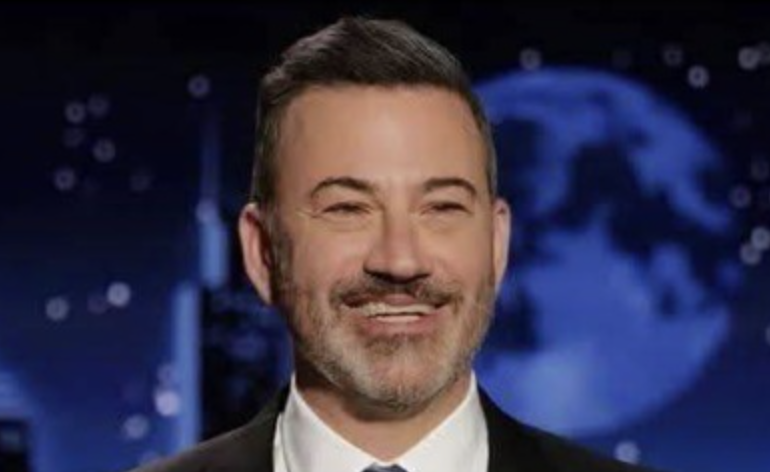
What began as a standard late-night jab has spiraled into a high-velocity case study on the survival of satire in a fractured America. The fallout from Jimmy Kimmel’s recent monologue has transcended the typical news cycle, evolving into a sweeping national referendum on the boundaries of political comedy, the weight of intent, and the volatile climate of a hyper-polarized public square.
A Joke Caught in the Crossfire
During his monologue, Kimmel delivered a remark that he framed as a traditional comedic roast. However, the bit landed in a landscape already primed for explosion. As the backlash mounted, Kimmel found himself forced to navigate a familiar but increasingly treacherous terrain: the gap between a comedian’s intent and a fractured audience’s perception.
Addressing the controversy head-on, Kimmel conceded that while the timing may have grated on some, the substance of his humor was never meant to flirt with themes of violence or personal harm. Instead, he argued that the bit was a commentary on the theater of modern politics—a critique of public image and the often-absurd media narratives that surround high-profile figures. From the host’s desk, it was a play on exaggeration; from the living rooms of his critics, it was something far more provocative.
The Defense of Intent
In a bid to clarify his stance, Kimmel pivoted to his public record, positioning the joke against the backdrop of his long-standing advocacy for gun safety and non-violence. He leaned on his history of vocal opposition to tragedy, firmly rejecting any suggestion that his words were a coded endorsement of harm. For Kimmel, the argument was foundational: context is the soul of satire. To strip away the irony and interpret a comedic line as a literal call to action is, in his view, a fundamental misreading of the medium.
However, the comedian didn’t just play defense. He launched a sharp critique of the “outrage machine,” characterized by what he described as a disproportionate and hostile reaction to speech. Kimmel lamented a public discourse so brittle that statements are routinely funneled into the most extreme interpretations possible. In such an environment, he argued, the traditional role of comedy—to use irony, discomfort, and hyperbole to mirror social realities—is under existential threat.
The Political Counter-Strike
The controversy gained significant gravity when it moved from social media threads to the highest levels of political influence. The response was swift and pointed:
-
Melania Trump voiced deep concern, framing the joke as a symptom of a corrosive and divisive national atmosphere.
-
Former President Donald Trump weighed in with characteristic bluntness, labeling the remark inappropriate and citing the heightened sensitivity of recent national events as reason for restraint.
These interventions transformed a fleeting comedic moment into a durable cultural conflict. To his critics, Kimmel had breached a fundamental line of decorum and timing. To his defenders, he was a necessary practitioner of free expression whose work must be protected, even—and perhaps especially—when it creates friction.
The Fragile Balance of the Public Square
Returning to the airwaves on Jimmy Kimmel Live!, the host doubled down on his clarification. He reiterated that the punchline was aimed at the benign targets of age and media optics, not personal tragedy. He remained steadfast in his refusal to accept a narrative that framed him as a provocateur of violence, calling such conclusions entirely inconsistent with his character and intent.
Yet, Kimmel also offered a moment of reflection on the broader human cost of escalating rhetoric. While invoking his First Amendment rights, he acknowledged that comedy does not exist in a vacuum; it is shaped by the raw emotions and timing of the world around it. He expressed a rare moment of empathy for those distressed by the current climate, underscoring a need for “shared humanity” even when the laughter stops.
Beyond the Monologue
Ultimately, this episode serves as a stark reminder of the fragile equilibrium between comedy and politics in the digital age. In a media ecosystem where every word is amplified and dissected by millions, the definition of “harm” has become a moving target.
The debate is no longer just about one late-night host or a single monologue. It is about the fundamental difficulty of defining the boundaries of humor in an era of uncertainty. As we move forward, the question remains: in a world where every joke can be weaponized, who gets to decide when the satire has gone too far?