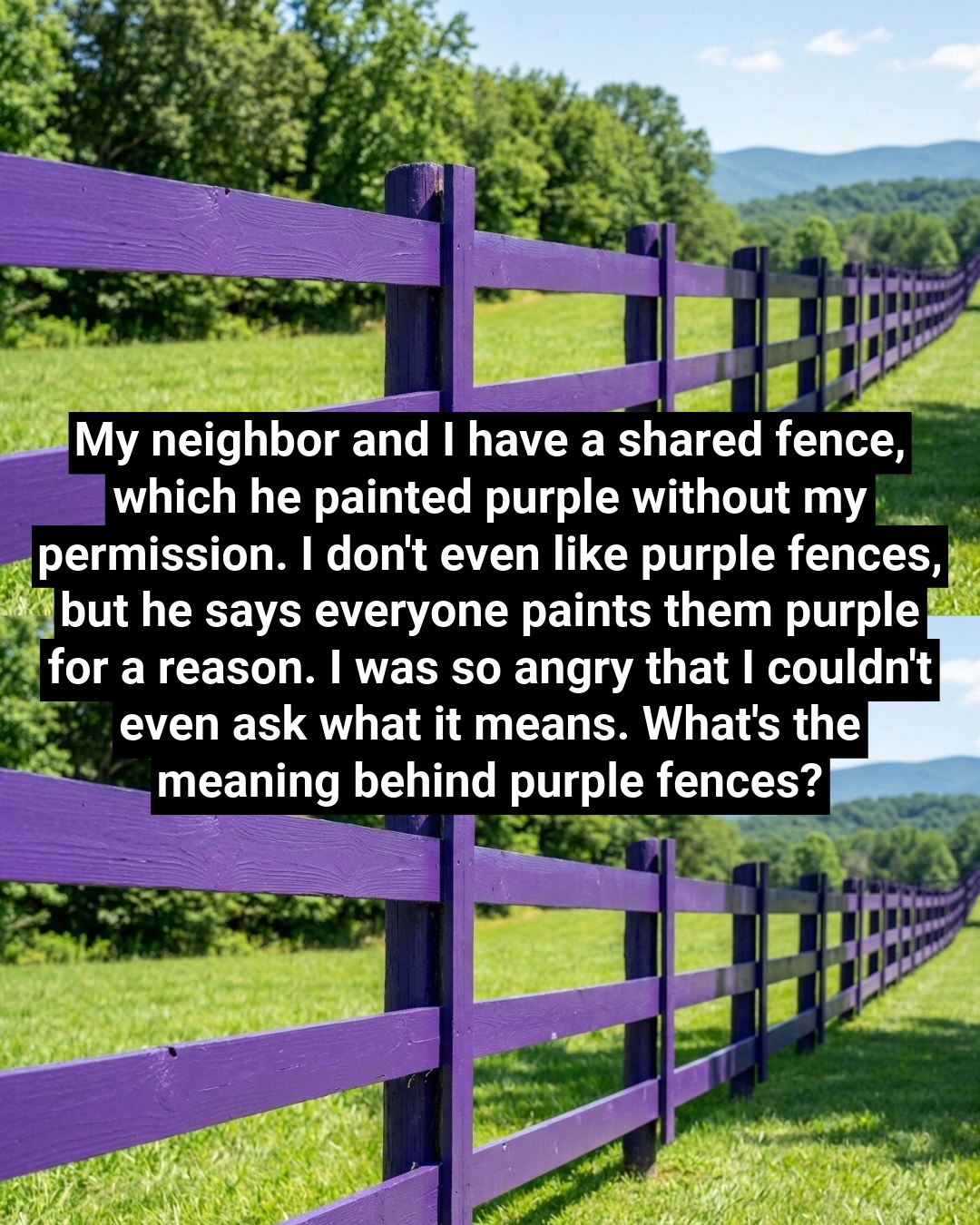
 To the uninitiated eye, a splash of violet on a rusted fence post might look like a homeowner’s eccentric DIY project or a child’s leftover craft experiment. But in the world of property rights and rural boundaries, that streak of color is far from decorative. It is a legal line in the sand—a silent, immovable warning that carries the full weight of the law.
Across a growing number of states, vertical purple stripes serve as the official shorthand for “No Trespassing.” The specifications are often precise: marks roughly an inch wide and eight inches long, positioned between three and five feet from the ground, and repeated every hundred feet. For hunters, hikers, and weekend wanderers, these marks are more than just a curiosity; they are a clear directive. Crossing that boundary isn’t just “exploring”—it’s a misdemeanor.
The Logic of the Lavender Line
Why have landowners swapped the traditional “Private Property” placard for a bucket of paint? The reasons are rooted in practicality and preservation.
-
Weather Resistance: Metal and plastic signs are vulnerable to the elements. They fade under the relentless sun, rust in the rain, or simply blow away during a high-wind storm. Paint, specifically formulated for the outdoors, bonds to the bark of a tree or the wood of a post, remaining visible for years.
-
Vandalism Proof: Signs are frequent targets for target practice or theft. It is significantly harder for a disgruntled passerby to remove a stripe of paint than it is to unscrew a piece of aluminum.
-
Aesthetic Integrity: For those who own vast stretches of pristine wilderness, nothing ruins a vista quite like a series of neon-orange plastic squares. Purple paint offers a way to secure a perimeter without cluttering the natural landscape with industrial eyesores.
A Patchwork of Laws
Despite its efficacy, the “Purple Paint Law” is not a universal language. The legal landscape is a patchwork; while states like Texas, Arkansas, and Missouri have long embraced the system, others still require physical signage to hold up in a court of law. This creates a high-stakes grey area for both the property owner and the traveler.
Landowners looking to ditch the hammer and nails must first consult their local statutes. Using the wrong color—or applying it in a state that doesn’t recognize the code—could leave a property unprotected in the eyes of the sheriff.
The Takeaway for the Trail
The next time you’re trekking through the backcountry and spot an odd, amethyst streak on a cedar limb or a fence line, don’t dismiss it as a fluke of fashion. That paint is a sentinel, standing watch where a sign once failed. In the language of the land, it is a firm, final “no.” Take the hint, respect the boundary, and turn back while the warning is still just a color, and not a citation.