
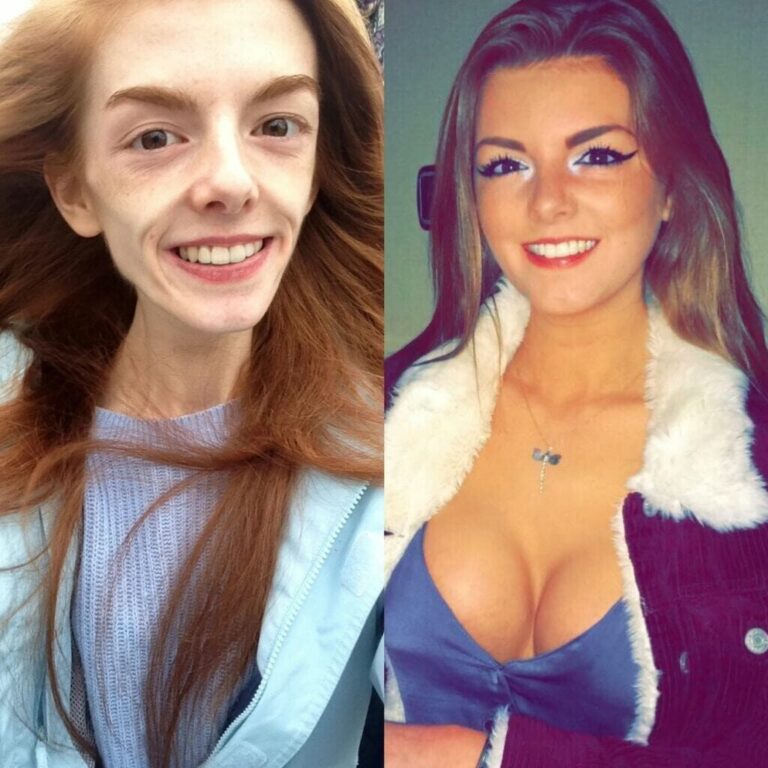
Annie Windley remembers the weight of a life measured in grams. The Derbyshire native, whose battle with anorexia once left her suspended between life and death, is now stepping into the light to pull others from the shadows. Her story is not merely a clinical case study; it is a harrowing, deeply human odyssey through the darkest corridors of a mental health crisis, culminating in a hard-won victory of the spirit.
At her most fragile, Annie weighed a mere 29 kilograms—barely four and a half stone. It was a medically critical nadir that left her heart fluttering in danger and her body too weak to even stand. Today, she shares that trauma not for pity, but as a lifeline for those currently drowning in the same silent sea.
A Decade-Long Descent
The cracks began to show in 2012. What started as a gradual diagnosis spiraled into a totalizing siege. By 2014, the girl from Derbyshire was no longer living; she was surviving a medical emergency. The early years of her illness were a blur of sterile hospital walls, intensive care units, and the rhythmic beep of monitors.
Annie’s struggle was punctuated by repeated admissions and the heavy reality of being sectioned under mental health legislation—a necessary intervention when the mind becomes its own worst enemy. These were the years of “crisis management,” where doctors fought to stabilize a body that was effectively shutting down.
The Internal Shift
For years, the medical interventions were external, but in 2017, something shifted within the marrow of her own resolve. Annie describes it as a definitive turning point—a moment where the motivation to live finally outweighed the compulsion to disappear.
This wasn’t a sudden “cure,” but a declaration of war. For the first time, Annie wasn’t recovering for her doctors or her family; she was recovering for herself. It was the beginning of a messy, non-linear, and exhausting process of rebuilding a person from the ground up.

Finding a New Pace
If anorexia was about the rigid, suffocating control of the body, Annie found its antidote in the rhythmic, liberating exertion of running. What could have been another tool for self-punishment was instead reclaimed as a source of strength.
“Running became a positive focus rather than a form of control or punishment,” she reflects.
The ultimate symbol of this reclamation came in October of last year, when Annie crossed the finish line of the Chesterfield Half Marathon. To the crowds, she was just another runner; to Annie, each mile was a distance traveled away from the girl who once couldn’t stand up. It was a triumph of endurance, both physical and psychological.

Redefining the Self
In the wreckage of her illness, Annie discovered that the “numbers” she once lived by—calories, kilograms, sizes—were a false currency. Her recovery has been powered by a profound philosophical shift: the realization that human value is found in character, kindness, and the depth of one’s relationships rather than the silhouette of one’s frame.
She has had to unlearn the “mental math” of anorexia. She recalls a time when a simple slice of pizza or a piece of chocolate wasn’t food, but a source of paralyzing anxiety. Rebuilding her relationship with the dinner table has been a slow process of challenging the intrusive thoughts that once dictated her every breath.
The Reality of the Long Haul
Annie is a veteran of this war, and she refuses to sugarcoat the reality. She speaks candidly about the “bad days”—the moments when the old shadows creep back, when body image distortions flare up, and when the mountain of recovery feels too steep to climb.
But it is in these setbacks that her true strength is revealed. She champions resilience over perfection, urging others to treat themselves with the same compassion they would offer a friend.
A Beacon for the Bound
Annie Windley’s narrative is a powerful testament to the fact that no one is ever “too far gone.” Her message to those trapped in the cycle of restriction is clear: Recovery is possible at any stage.
She encourages those struggling to stop investing their limited energy into the void of an eating disorder and to start reinvesting it into passions, connections, and the simple beauty of being present. Her journey from a critical hospital bed to the finish line of a half marathon serves as a vibrant, breathing proof that life can be rebuilt—not all at once, but step by courageous step.