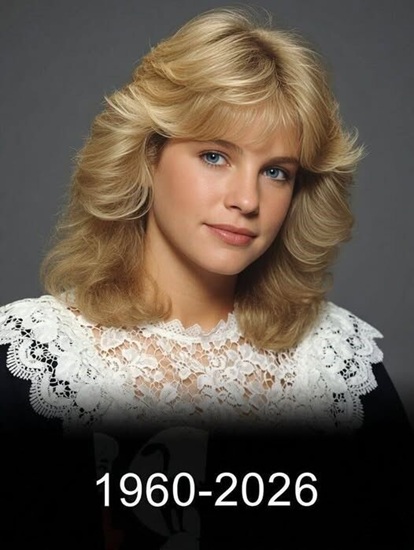
The 1980s were a decade defined by a relentless, neon-soaked pursuit of the “Next Big Thing.” Hollywood was a factory of excess, churning out larger-than-life personas and high-concept blockbusters designed for maximum commercial impact. In this atmosphere of hyper-visibility, Jennifer Runyon carved out a niche that was strikingly counter-cultural. She wasn’t a firebrand or a tabloid fixture; she was the grounded presence in the middle of the storm, a young talent who navigated the explosive world of teen cinema and television with a rare, understated grace.
While the industry was often intoxicated by the theatrical, Runyon built her reputation on the “girl next door” archetype—not as a cliché, but as a deliberate acting choice. Her performances felt accessible and authentic, offering a vital anchor to audiences who found the era’s penchant for caricature exhausting. She didn’t chase the white-hot center of the celebrity sun; instead, she focused on the craft of steady, reliable work, becoming a recognizable face without ever succumbing to the noise of “celebrity amplification.”
The Art of the Understated Anchor
Runyon’s filmography serves as a time capsule for 1980s pop culture, most notably her appearance in the 1984 juggernaut Ghostbusters. Whether she was navigating the supernatural or the high-school hallways of television sitcoms, her approach remained consistent: naturalism over histrionics. She possessed a knack for subtlety and emotional restraint, a professional trait that made her characters feel like real people caught in fantastical or comedic circumstances. It was this very consistency—a quiet, rhythmic reliability—that became her professional hallmark.
The Meat-Grinder of Eighties Fame
To understand Runyon’s trajectory, one must understand the environment of the era. The 1980s entertainment industry was a high-velocity machine that demanded total brand alignment from its stars. Actors were expected to be perpetual-motion machines: auditioning, promoting, and performing in a cycle that effectively erased the boundaries between the public persona and the private individual.
For Runyon, this wasn’t just a career; it was a gauntlet. The era offered unparalleled visibility, but it demanded a steep price in privacy and personal equilibrium. It was an industry structure that often weighed a performer’s marketability far more heavily than their mental or personal well-being.
The Radical Act of Stepping Away
At the height of her viability, Runyon did something that many in Hollywood consider unthinkable: she chose to leave. This wasn’t a departure fueled by a “fall from grace” or a public meltdown. There were no dramatic headlines or burning bridges. Instead, it was a deliberate, graceful pivot in priorities.
She traded the grueling production schedules of Tinseltown for the stability of a private life. Her marriage to Todd Corman and the subsequent birth of her children, Wyatt and Bayley, became the new center of her gravity. In choosing motherhood and a stable domestic environment over the erratic heartbeat of the film industry, Runyon joined a small, dignified group of performers who recognized that the pursuit of fame is not a life sentence.
Redefining Success Beyond the Frame
In the years following her departure, Runyon has largely avoided the “where are they now” media trap. Unlike former stars who use social media or reality television to claw back into the public consciousness, she has embraced the silence of a life well-lived outside the spotlight.
Her story highlights a fundamental truth that Hollywood often tries to obscure: longevity in the industry is not the only metric of a successful life. For Runyon, success was redefined as the agency to walk away on her own terms. She traded the fleeting validation of the screen for the enduring fulfillment of privacy and family.
A Retrospective Resonances
As the decades have passed, a new generation of critics and nostalgic audiences has begun to look back at the 1980s with a more nuanced lens. In doing so, the contributions of actors like Jennifer Runyon have undergone a quiet reassessment. While she was never the marquee “A-lister” of her generation, her work is now viewed with a fresh appreciation for its sincerity.
In the ensemble casts of the era, it is often the quieter performances that provide the necessary gravity for the leads to orbit. Runyon’s work is a masterclass in this dynamic, proving that subtle acting is often more visible in the rearview mirror than it was at the time of release. She brought a humanizing balance to some of the decade’s most iconic, over-the-top productions.
The Choice to be Absent
The modern entertainment industry still pushes a narrow, award-centric definition of achievement. Runyon’s path offers a powerful counter-narrative. Her life suggests that the ability to recognize when a professional chapter has reached its natural conclusion is, in itself, a form of profound accomplishment.
She navigated the challenge of balancing ambition with personal health, ultimately deciding that creative work no longer needed to be the focal point of her identity. It is a transition from public performance to private personhood that requires more courage than many realize.
A Legacy of Intent
Ultimately, Jennifer Runyon’s legacy isn’t defined by the roles she didn’t take, but by the life she did build. Her story isn’t a tragedy of a “disappearing act”; it is a narrative of transition. She remains a permanent fixture of 1980s cinematic history, but she also serves as a representative for those who choose a personal compass over a public spotlight.
In an industry that fetishizes permanence and “staying power,” Runyon’s path suggests that stepping away can be an empowering, deliberate choice. Her career serves as a reminder that the most significant legacies aren’t always built under the glare of a studio light—sometimes, they are shaped in the quiet moments of an intentional life.