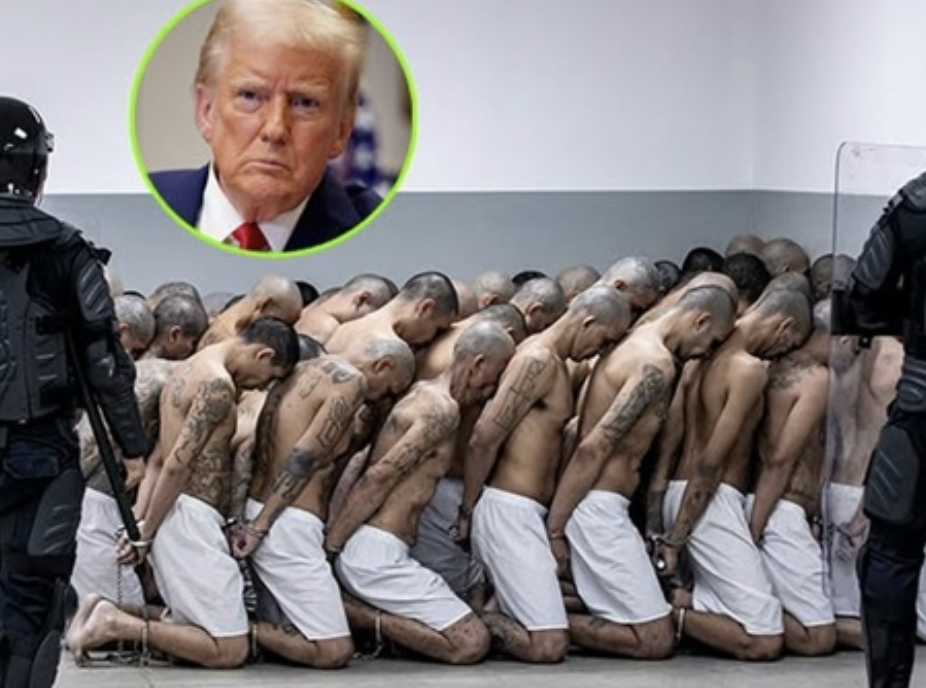
Emerging from the volcanic dust approximately 70 kilometers east of the capital, the Center for the Confinement of Terrorism—universally known by its chilling acronym, CECOT—has solidified its status as the world’s most scrutinized laboratory of incarceration. This sprawling monolith of steel and concrete isn’t just a prison; it is the physical manifestation of President Nayib Bukele’s “Iron Fist” security doctrine. Since its gates swung shut in February 2023, the facility has served as the government’s crown jewel in an aggressive campaign to dismantle the gang-led anarchy that once defined Salvadoran life.
Designed with a staggering capacity for 40,000 inmates, CECOT now stands as one of the largest correctional structures in the Americas. While the administration frames it as a vital organ of public safety, the facility’s sheer scale and uncompromising operational philosophy have ignited a firestorm of international debate regarding the cost of order, the vacuum of due process, and the ethics of permanent confinement.
A Mandate of Iron: The Political Calculus
The genesis of CECOT lies in Bukele’s sweeping security initiative, fueled by emergency legal powers and a relentless offensive against the country’s notorious street gangs. For the average Salvadoran, the results are difficult to ignore: homicide rates have plummeted, and communities once paralyzed by extortion and violence are breathing again. Officials are quick to credit this newfound peace to the mass detentions housed within these walls.
However, beneath the veneer of improved safety lies a legal architecture that critics describe as fragile. Human rights advocates and legal scholars warn that the emergency measures used to fill CECOT’s cells often bypass traditional due process. There is a growing chorus of concern regarding “wrongful sweeps,” where the rush for security may have ensnared the innocent alongside the guilty, leaving them in a legal limbo where evidence is secondary to the state’s directive.
The Architecture of Erasure
In the eyes of security analysts, CECOT is less a “correctional” facility and more a warehouse of containment. The infrastructure is a masterclass in psychological and physical isolation; every corridor and common space is engineered for absolute surveillance. Unlike modern prisons that offer a path toward social reintegration, CECOT’s design prioritizes the total management of movement.
International observers have noted a stark absence of traditional rehabilitation programs—no workshops, no classrooms, no hope for a “second act.” The cells are high-occupancy environments, stripped of personal space and minimal comforts. For those inside, the design choice is clear: this is a journey of long-term detention where the outside world is meant to be forgotten.
The Global Stage: Immigration and High-Stakes Diplomacy
CECOT’s shadow now stretches beyond El Salvador’s borders, becoming a pawn in the complex chess match of international immigration. The facility gained renewed global prominence during discussions involving U.S. deportation strategies. Media reports have linked the prison to the hardline stances of former U.S. President Donald Trump, sparking debates on how foreign nationals with criminal records are processed under international pacts.
By 2025, reports surfaced indicating that the United States and El Salvador had reached arrangements to utilize CECOT as a temporary holding ground for deported individuals accused of violent offenses. While U.S. enforcement officials defend these measures as essential to curbing transnational crime and irregular migration, judicial reviews have scrutinized the legality of these “emergency” transfers, questioning the scope of such cross-border detention schemes.
The Human Cost: A Chorus of Criticism
The facility has become a lightning rod for international monitoring bodies. Reports from within describe a life of extreme restriction: a world of windowless cells, metal bunks, and a total lack of privacy. Critics argue that the rigid daily routines and the deprivation of movement may violate basic international standards for humane treatment.
“The focus on isolation and the indefinite nature of this confinement is deeply troubling,” says Miguel Sarre, former member of the UN Subcommittee for the Prevention of Torture.
Sarre and other analysts argue that CECOT’s obsession with security has completely eclipsed the necessity for rehabilitation. Yet, a veil of secrecy remains; because independent monitoring is strictly limited, much of the world’s knowledge of CECOT is filtered through official tours or the haunting testimony of those watching from the periphery.
Life in the Gray: Uniforms and Surveillance
Inside, the environment is one of total uniformity. Inmates are shorn of their hair and clad in identical white uniforms, a policy authorities claim is vital for maintaining order among a high-risk population. Life is measured in minutes of controlled exercise and long hours of confinement. Every meal, every movement, and every hour of sleep is governed by a central command that views any deviation as a security breach.
A Divided Narrative: Symbol vs. Specter
Public perception of CECOT remains a study in contrasts. For a population weary of decades of gang dominance, the prison is a symbol of a state that has finally reclaimed its sovereignty. To them, the “Iron Fist” is the only hand that can hold a shattered society together.
To the international community, however, CECOT is a specter—a warning of what happens when the pendulum of justice swings too far toward security at the expense of human rights. This divergence has transformed the prison into a global symbol of the tension between safety and liberty.
The Future of Global Justice
The implications of the CECOT model are currently rippling through the corridors of power worldwide. As governments reassess their own border security and detention frameworks, the “Salvadoran Way” offers a controversial blueprint for addressing transnational crime.
As of 2026, CECOT remains at the epicenter of a global conversation that is far from resolved. It is a facility that represents the ultimate trade-off: a fortress built to secure a nation, but one that leaves the world questioning the ultimate price of that security. Whether it is seen as a monument to restored order or a monument to the erosion of rights, CECOT stands as a stark reminder that in the modern age, the search for safety often leads to the most uncomfortable of places.