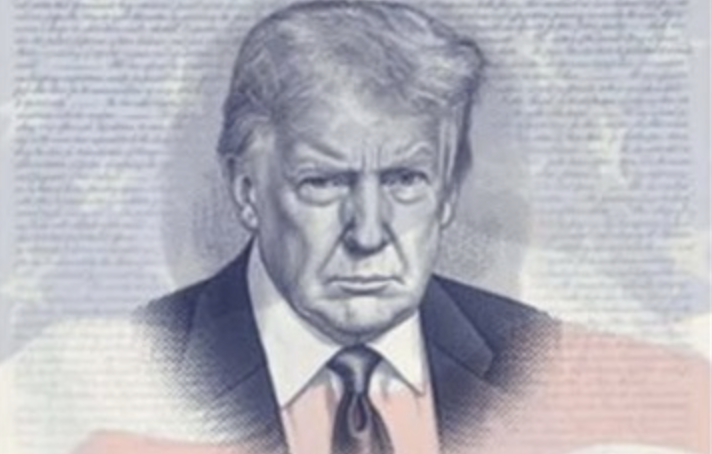
As the United States marches toward its semiquincentennial in 2026, a digital firestorm has erupted over a purported limited-edition passport redesign that would trade traditional aesthetic neutrality for a bold—and deeply polarizing—new look.
The concept, which has dominated headlines and social media feeds alike, reportedly features a visual tapestry woven from the nation’s founding era. While standard patriotic motifs tied to the U.S. Constitution are allegedly central to the aesthetic, the lightning rod for the current controversy is the claim that President Donald Trump’s likeness is integrated into the proposed visual theme.
A Collision of History and Modern Politics
The mere suggestion of a passport featuring a contemporary political figure has transformed a standard bureaucratic update into a cultural flashpoint. On one side of the digital aisle, supporters have embraced the concept with fervor. For these advocates, the design represents a high-octane tribute to the American spirit, perfectly timed for the 250th anniversary of the nation’s birth. They argue that a commemorative document of this magnitude should serve as a bold symbol of national pride, viewing the inclusion of modern leadership as a valid reflection of the country’s current historical trajectory.
The Tradition of Neutrality
However, the proposal has hit a wall of institutional and public resistance from critics who view the move as a breach of long-standing federal protocol. Historically, the American passport has functioned as a strictly non-partisan document, leaning on timeless national symbols—eagles, monuments, and historical landscapes—to ensure international consistency.
Legal and diplomatic skeptics argue that a passport’s primary function is to facilitate seamless global travel, a task they fear could be complicated by “personalizing” an official government identity document. The concern is that introducing individual political figures into the design could invite unwanted political interpretation at international borders, straying from the document’s role as a neutral representative of the state.
A Nation Divided in the Comments Section
As the report circulated, the online reaction matured into a microcosm of the broader American political landscape:
-
The Enthusiasts: Treat the proposed design as a “must-have” collectible, a tangible piece of history that honors the 250-year milestone with a modern twist.
-
The Skeptics: Maintain that federal documents should remain above the fray of partisan politics to preserve their integrity and universal recognition.
What began as a discussion on commemorative stationery has rapidly evolved into a heavy-weight debate over national identity. Whether this design ever reaches the printing presses or remains a viral lightning rod, it has underscored a fundamental question: In a landmark year of celebration, how should America choose to present itself to the rest of the world?
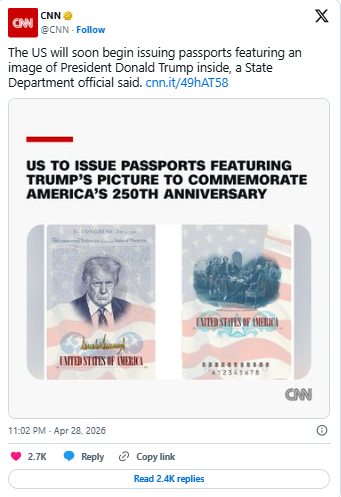
A chorus of skeptics has emerged, questioning whether injecting a modern political figure into a federal travel document could trigger a diplomatic headache or alter how Americans are perceived abroad. Because passports serve as a traveler’s primary international handshake, their design traditionally leans on neutrality to ensure seamless recognition and acceptance across every border. Critics contend that any departure from this established norm risks sparking unnecessary scrutiny in sensitive international contexts.
Conversely, proponents point out that commemorative government flair is far from unprecedented during national milestones. The United States has a long history of releasing special-edition coins and stamps to mark historical turning points. However, detractors are quick to draw a hard line: unlike a collectible stamp, a passport is a high-stakes legal document, not a souvenir.
Within the digital fray, some users proposed a middle ground: if such a design were ever to see the light of day, it should be an optional, limited-run issuance rather than a mandatory replacement for the standard-issue blue book. Rumors have swirled that this purported version might only be accessible through specific, localized channels rather than through a universal national rollout.
The debate has inevitably bled into a larger conversation about the “branding” of government institutions. While critics view the move as a partisan encroachment on public space, defenders see it as a vibrant celebration of American identity tied to a once-in-a-generation milestone. This divide serves as a stark reflection of the ongoing polarization regarding how, and by whom, national symbols are defined.
While media reports suggest that anniversary festivities will include a wide array of cultural initiatives—from public exhibitions to symbolic tributes—government officials have remained vague. Details regarding a specific passport overhaul remain firmly in the realm of public speculation rather than confirmed nationwide policy.
Social media has acted as a primary engine for the story, with users dissecting screenshots and trading interpretations of the design’s deeper meaning. As is common in today’s political climate, the narrative has fractured; some view the concept through a lens of patriotic symbolism, while others see it as a challenge to institutional tradition.
Historically, the American passport has been a gallery of collective icons: the bald eagle, the Stars and Stripes, and monuments of stone and steel—symbols chosen to represent a unified history rather than an individual leader. Supporters of the redesign argue that a 250th anniversary is the perfect moment to refresh these visuals. Critics, however, maintain that for an identification document to hold its weight globally, it must remain a sanctuary of consistency, free from the shifting winds of political influence.
For now, the “250th Anniversary Passport” exists primarily as a digital lightning rod rather than a bureaucratic reality. The fervor surrounding it highlights a fundamental tension in the American psyche: the desire to celebrate national pride versus the traditional requirement for official documents to remain neutral, stable, and universally recognized. Whether viewed as a patriotic tribute or a bridge too far, the debate underscores the delicate balance between commemorative expression and the solemnity of the state.