In American politics, power is something leaders are expected to handle with humility, not bravado. The fundamental architecture of the U.S. government—defined by checks and balances, federalism, and the separation of powers—is rooted in a deep-seated distrust of centralized authority. The system was designed under the assumption that ambition should be restrained by competing ambitions, never celebrated.
When an elected official speaks openly about their personal clout, it signals a mindset at odds with the republic’s core principles. This isn’t a matter of partisanship; it is a matter of structure. Whether a Republican touts executive overreach or a Democrat wears their influence as a badge of honor, the healthy civic response is skepticism. In the American tradition, power is meant to be diffused and challenged, not brandished as a credential.
The Case of Rep. Jasmine Crockett
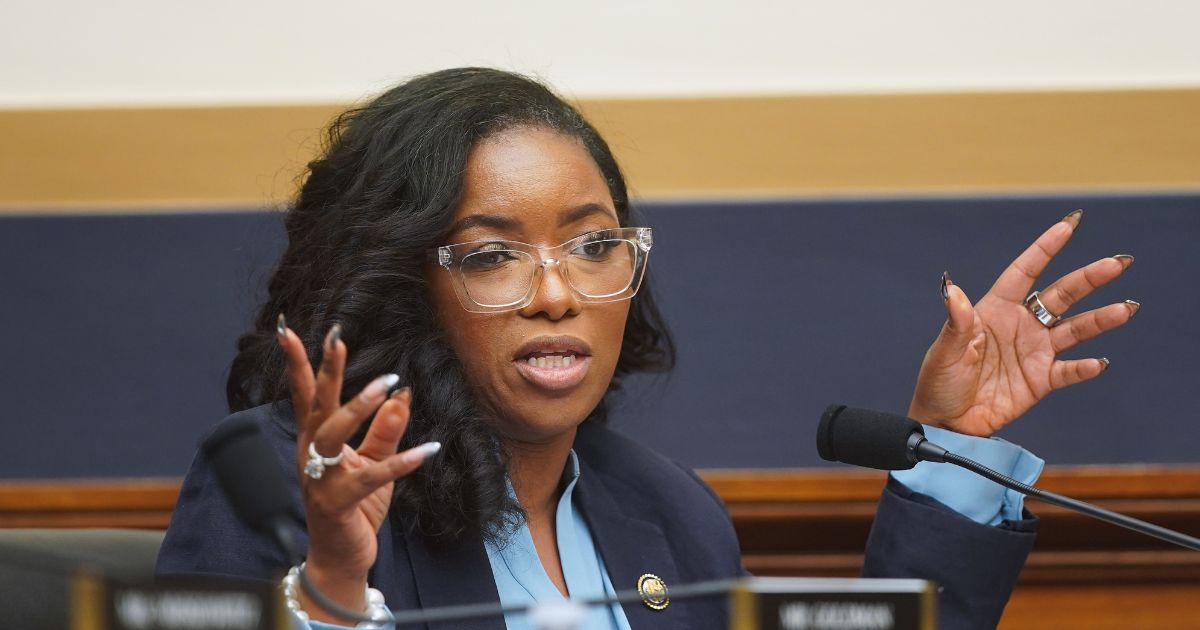
This brings us to Representative Jasmine Crockett (D-TX). During a recent appearance on the talk show Sherri, hosted by Sherri Shepherd, the congresswoman displayed the exact brand of self-importance that runs counter to these democratic norms.
True to form, Crockett framed her position through the lens of identity politics before pivoting to a defense of her personal status. She told the audience:
“I’m a Black woman first… the level of disrespect that is continuously lobbed against us… I’m like, wait a minute now, I am one of the 535 most powerful people in this country, and for some reason you think we on the same level… it’s not going to happen.”
Why This Matters
Crockett’s remarks highlight a growing trend where politicians demand deference based on their rank. By explicitly stating that she is not “on the same level” as those she perceives as disrespectful, she flips the script of public service.
Voters should not be impressed by a politician’s claim to power; they should be reassured by how that power is limited. When a lawmaker views their office as a shield against criticism or a mark of superiority, they lose sight of the fact that in a representative democracy, the ultimate authority is supposed to remain with the people—not the 535 individuals in the Capitol.
The double standard here is staggering. Imagine the media firestorm if a congressman like Tim Burchett or Jim Jordan declared that being a “white man” came before their duty to their constituents. People would be calling for their immediate resignation. Yet, when Crockett admits her primary identity takes precedence over her role as a representative, it is met with a shrug. Does this mean the needs of non-Black constituents in her district are secondary? The premise is fundamentally absurd.
Beyond the identity politics, her claim to be among the “535 most powerful people” reveals a delusional sense of self-importance. While a seat in the House carries weight, it pales in comparison to the influence of Supreme Court Justices, the President, or billionaires whose wealth can shift the global economy. She is a rank-and-file member, not a titan of industry or a head of state.
Most concerning, however, is the sheer intoxication with power Crockett displayed. For anyone who values the American experiment—regardless of race or party—this should be a major red flag.
The American system was not just built to discourage centralized power; it was built to frustrate it. Our founders designed a framework of friction, where authority is divided and checked to ensure no single individual can impose their will unchecked. This “gridlock” isn’t a bug—it’s a feature meant to protect liberty.
Rhetoric matters because it reveals a politician’s perspective. When a leader speaks as if power is a personal possession rather than a temporary stewardship, they lose the plot of public service. In 2026, the truth remains: public office is an exercise in restraint, not an ego trip. Power should be limited, questioned, and temporary. Any politician who relishes being “powerful” is the living embodiment of why our system’s safeguards were created in the first place.