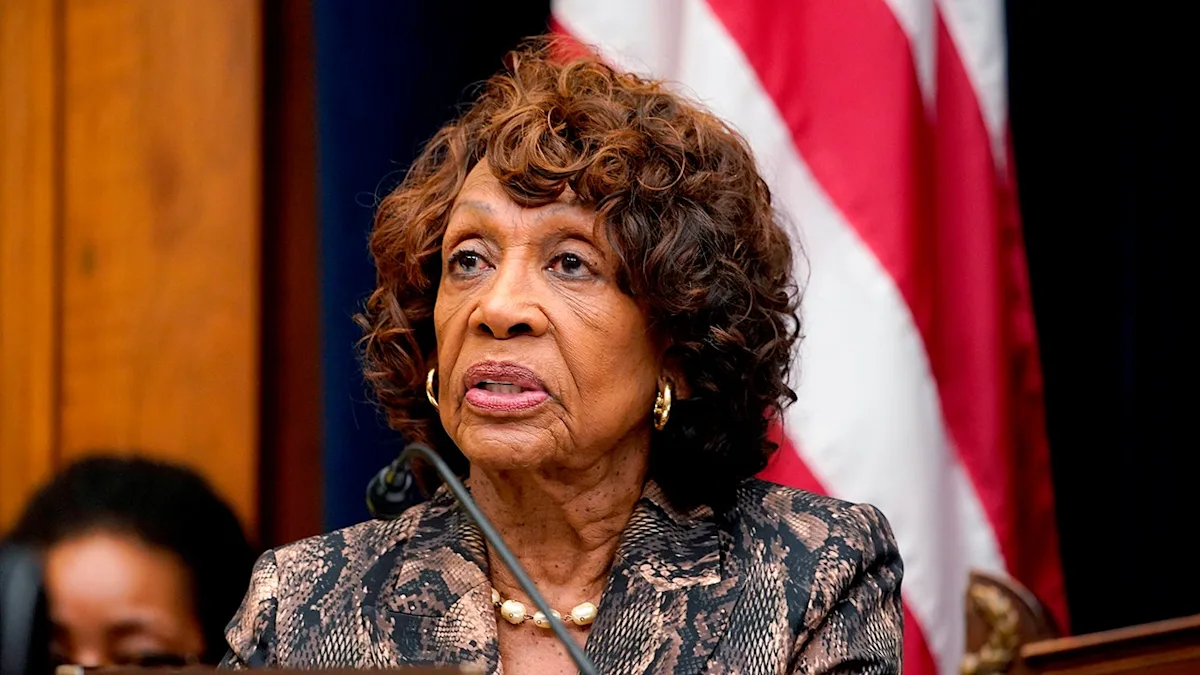
Maxine Waters’ Campaign Hit with $68,000 Fine Over Multiple Federal Election Law Violations
Rep. Maxine Waters (D-CA), a long-serving and influential member of Congress, is facing fresh political turbulence after her 2020 campaign committee, Citizens for Waters, agreed to pay a $68,000 fine to the Federal Election Commission (FEC). The penalty follows a formal investigation that uncovered a series of campaign finance violations, including excessive individual donations, improper reporting of financial activity, and prohibited cash payments—issues that have added to the growing list of controversies surrounding the veteran lawmaker’s political operations.
The agreement with the FEC, finalized earlier this year, allows both parties to avoid a prolonged legal battle. As part of the settlement, the campaign’s treasurer will also be required to attend an official FEC compliance training session—a clear indication that regulators expect significant changes in how Waters’ campaign handles money moving forward.
Excessive Contributions and Prohibited Cash Transactions
According to official FEC findings, the violations occurred primarily during the 2019–2020 election cycle. In that period, Citizens for Waters accepted $19,000 in contributions from just seven individual donors, well over the federal limit of $2,800 per person for a single election. While the campaign did eventually return the excessive contributions, the refunds were not immediate—raising questions about whether the delay was due to oversight, negligence, or strategic financial maneuvering.
The FEC also flagged four separate instances in which the campaign made prohibited cash disbursements exceeding $100 each. In total, these transactions amounted to $7,000. Federal election law explicitly limits the size of cash payments to prevent untraceable or off-the-record spending.
Campaign attorney Leilani Beaver defended the committee’s conduct, arguing that the violations were “unintentional” and stemmed from misunderstandings of the regulations rather than any deliberate attempt to skirt the law. “The campaign has taken corrective measures and will ensure compliance in future elections,” Beaver said.
A Pattern of Financial Controversies
This is far from the first time Rep. Waters—who has represented California’s 43rd Congressional District since 1991 and currently serves as the ranking Democrat on the House Financial Services Committee—has faced scrutiny over her campaign’s handling of funds.
In 2023, reports revealed that Citizens for Waters had paid Waters’ daughter, Karen Waters, over $192,000 for running the campaign’s controversial “slate mailer” program—a fundraising method in which candidates pay for endorsement placement on mass-mailed voter guides. While the practice is legal under California law, it has been criticized for creating the appearance of nepotism and for blurring the lines between campaign advertising and paid political endorsements.
The FEC has previously investigated other complaints involving Waters’ campaign. In 2018, the agency dismissed allegations of questionable contributions, but watchdog groups have consistently pointed to recurring compliance issues.
Beyond Campaign Finance: A Firebrand Political Figure
While campaign finance controversies have become a recurring theme in her political career, Waters is perhaps even better known for her fiery rhetoric and willingness to engage in direct political confrontation. She has publicly clashed with both Republican and corporate power figures, including former President Donald Trump and billionaire entrepreneur Elon Musk.
At a protest in Los Angeles, Waters famously questioned former First Lady Melania Trump’s immigration status—an apparent jab at the Trump administration’s hardline stance on birthright citizenship and immigration enforcement. In other instances, she has accused Musk of leveraging his influence in ways that “overstep” appropriate boundaries between private industry and government oversight.
What Comes Next
With the $68,000 fine now on record, political analysts suggest that the issue may fade from headlines in the short term but could resurface during Waters’ next reelection campaign, especially if challengers seek to portray her as ethically compromised. For now, the settlement closes one chapter in a long-running saga of campaign finance disputes—but it also adds another entry to the list of questions surrounding how the congresswoman’s political machine operates.
Given her seniority, committee position, and national profile, any misstep—financial or political—remains high-visibility. Whether this latest FEC ruling is viewed as a minor compliance hiccup or as part of a broader pattern will likely depend on the political lens through which voters and critics interpret it.