Trump Revives Presidential Fitness Test, Sparking National Flashbacks and Controversy
For millions of Americans, the phrase “Presidential Fitness Test” doesn’t evoke a sense of patriotic vigor but rather a visceral memory of humiliation, breathlessness, and sore limbs. Now, thanks to President Donald Trump, that memory is being dusted off and reinstated.
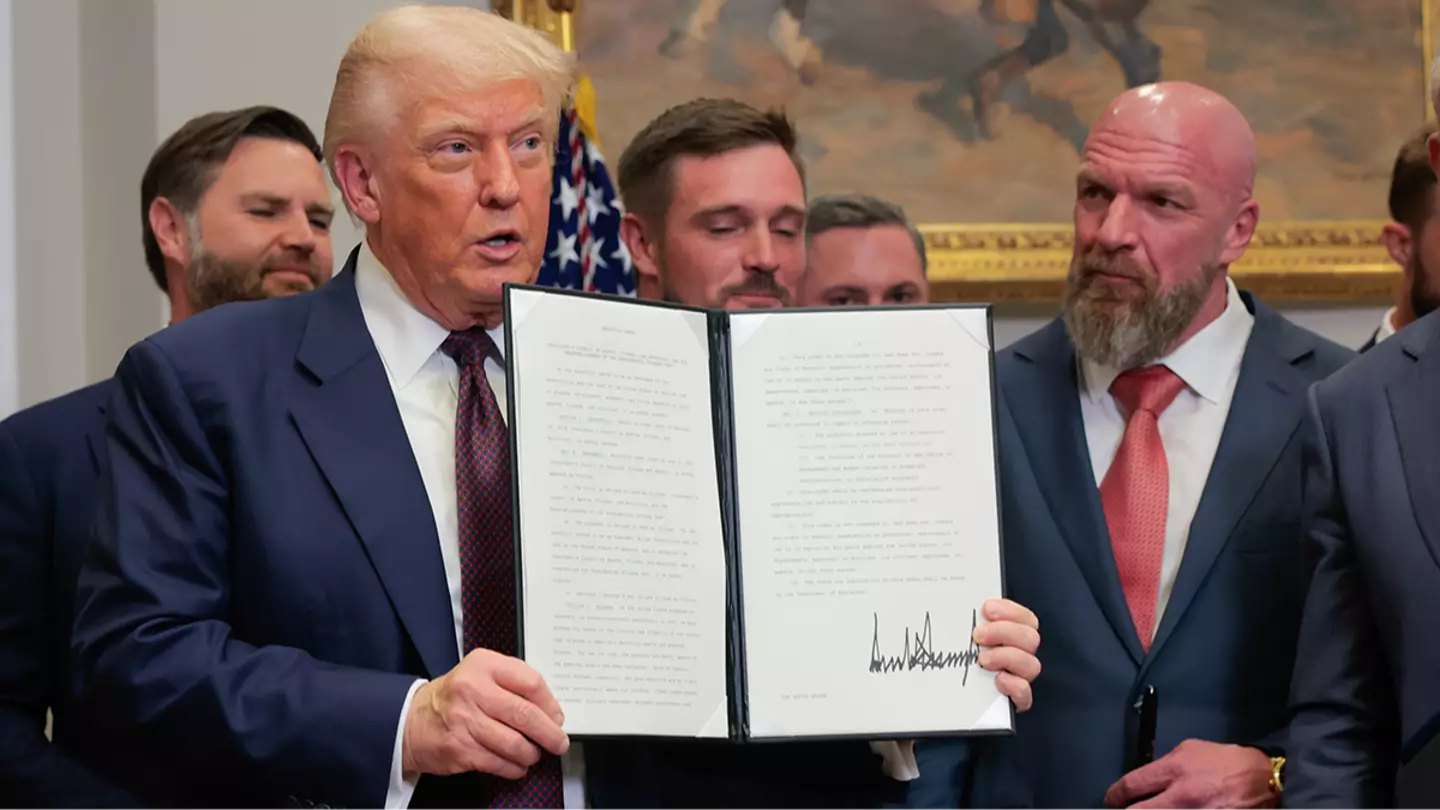
In a surprise executive order signed on July 31, 2025, Trump announced the return of the infamous physical fitness challenge in all public schools across the United States. Flanked by sports figures like PGA golfer Bryson DeChambeau, Chiefs kicker Harrison Butker, and retired NFL linebacker Lawrence Taylor, the president declared the revival as central to his campaign to “Make America Healthy Again.”
“This was a tradition, a powerful one,” Trump proclaimed. “We’re bringing it back stronger than ever. Kids today need strength, discipline, and some of that winning spirit again.”
A Test That Haunts Generations
First implemented in 1966 during the Lyndon B. Johnson administration, the Presidential Fitness Test was a one-size-fits-all battery of exercises—including the one-mile run, sit-ups, pull-ups, push-ups, and shuttle runs—designed to measure physical performance in schoolchildren. It quickly gained notoriety for pushing kids past their limits, often publicly.
Although its aim was to foster nationwide fitness, the test soon became a source of dread. For some, it was the origin of lifelong insecurities. For others, a yearly gauntlet of public failure.
Under President Obama in 2012, the test was officially replaced by the more individualized, less punitive FitnessGram program. That shift was designed to emphasize personal improvement, wellness education, and inclusivity.
But with Trump’s new executive order, the old standards—and the old anxieties—are back.
A Social Media Meltdown
Within minutes of the announcement, social media erupted with a tsunami of nostalgia, mockery, and exasperation.
“I can still hear the beep test in my nightmares,” wrote one Reddit user. “We used to do it in middle school, and kids would throw up after.”
Another added: “I was a fat kid. This test taught me shame, not fitness.”
One particularly viral comment summed up the mood: “Let’s see Trump pass it.”
An Agenda of Strength and Spectacle
Trump’s justification for bringing the test back appears to be twofold: reviving what he sees as a golden era of physical standards and signaling strength ahead of America’s role as host in upcoming major international sporting events, including the 2025 Ryder Cup, the 2026 FIFA World Cup, and the 2028 Summer Olympics in Los Angeles.
“We want the world to see what strong young Americans look like,” said White House Press Secretary Karoline Leavitt. “This is about health, national pride, and preparing the next generation for greatness.”
Critics, however, see something more performative—and political.
Experts Warn of Old Problems
Dr. Melissa Greene, a pediatric exercise psychologist, cautioned that reviving the Presidential Fitness Test could do more harm than good.
“Children today are under immense pressure from academic, social, and digital environments. Reintroducing a high-stakes physical assessment that doesn’t account for individual needs could be damaging, especially for kids with disabilities or chronic health conditions.”
Greene also noted the historical tendency of the test to amplify feelings of shame and exclusion, particularly among children who didn’t conform to traditional standards of athleticism.
“Fitness should be inclusive and motivating—not something that feels like a punishment.”
Supporters Applaud a Tougher Approach
Trump’s supporters have lauded the decision as long overdue. “The old ways worked,” said one gym teacher in Florida. “We’re raising a generation of kids who can’t run a mile or do a push-up. This is about resilience.”
Conservatives see the test’s return as a symbolic blow against what they perceive as the excesses of “soft” modern education.
From Policy to Playground: Implementation Questions Remain
The White House has yet to release comprehensive guidelines on how the test will be implemented nationwide. Questions remain about whether it will be mandatory, how it will be adapted for students with special needs, and whether schools will receive the funding necessary to update facilities and train staff.
Educators are already expressing concern. “Our PE program is stretched thin as it is,” said Carlos Ramirez, a middle school principal in Texas. “Are we getting the funding or just the order?”
An Opportunity or a Setback?
Whether the revived test becomes a tool for empowerment or a flashpoint for backlash will depend on how it is deployed—and how America chooses to redefine fitness in the 21st century.
Emily Carter, now a personal trainer, recalls the old test as both painful and formative.
“I hated it. But it taught me something about pushing myself. That said, I also saw how many of my classmates came away discouraged or even humiliated. If we’re going to do this, it better be different.”
Final Thoughts
Trump’s move taps into deeper cultural divides about education, discipline, and national identity. The return of the Presidential Fitness Test isn’t just about push-ups and sit-ups—it’s about what kind of country America wants to be.
Will it empower students to rise to a challenge—or repeat the mistakes of the past in the name of tradition?
One thing is certain: gym class just got political again.