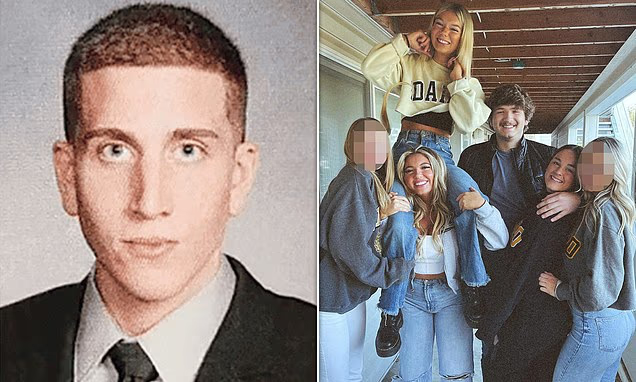
Before Bryan Kohberger carried out the brutal murders of four University of Idaho students in a 13-minute knife attack that shocked the nation, he had spent years immersed in the academic study of violent criminal behavior. His focus was not casual — it was deeply concentrated and disturbingly detailed. As a graduate student at DeSales University in Pennsylvania, Kohberger pursued a master’s degree in criminal justice, where he studied the psychological profiles, behavioral patterns, and motivations of some of the world’s most notorious killers.
Among the violent figures he studied was Elliot Rodger — a name that would later resurface with chilling relevance.
Rodger was responsible for the 2014 Isla Vista killings, a rampage that left six people dead and 13 others injured near the University of California, Santa Barbara. After the massacre, Rodger took his own life. In the years since, he has become an infamous symbol within the incel (involuntary celibate) subculture — a toxic online community that romanticizes misogyny and violence against women, often rooted in rejection and perceived social isolation.
Two of Kohberger’s former classmates at DeSales spoke with the Daily Mail, recounting how Rodger’s case was covered in class discussions. They specifically remember studying Rodger’s deeply disturbing 137-page manifesto — a lengthy and hate-filled document in which he outlined his rage toward women and the society that he felt had excluded him. In the text, Rodger named individuals from his life, including a former friend named Maddy, who he claimed had come to “represent everything I hate and despise.”
Rodger’s manifesto offered students a direct look into the mind of a killer — a mind consumed by resentment, alienation, and violent ideologies. For most, the study of such material is meant to help future law enforcement professionals and psychologists understand, prevent, and intervene in similar cases. But in retrospect, the material Kohberger was exposed to raises disturbing questions about how he internalized that information — and whether it helped feed a darkness that was already present.
Kohberger’s academic path was marked by an intense fascination with criminal psychology. He even posted surveys on Reddit seeking participants to describe how they planned, committed, and felt after carrying out crimes — a move that in hindsight reads as eerily foreshadowing.
Now accused of one of the most gruesome mass killings in recent memory, Kohberger’s background in criminology and his exposure to cases like Rodger’s are being scrutinized for clues. Was he simply a student of criminal behavior — or was he rehearsing his own?
As more information emerges about Kohberger’s past, the line between academic interest and personal obsession appears to blur. And for those who once sat beside him in the classroom, the memory of discussing Elliot Rodger — and the manifesto filled with hate — carries a haunting resonance.