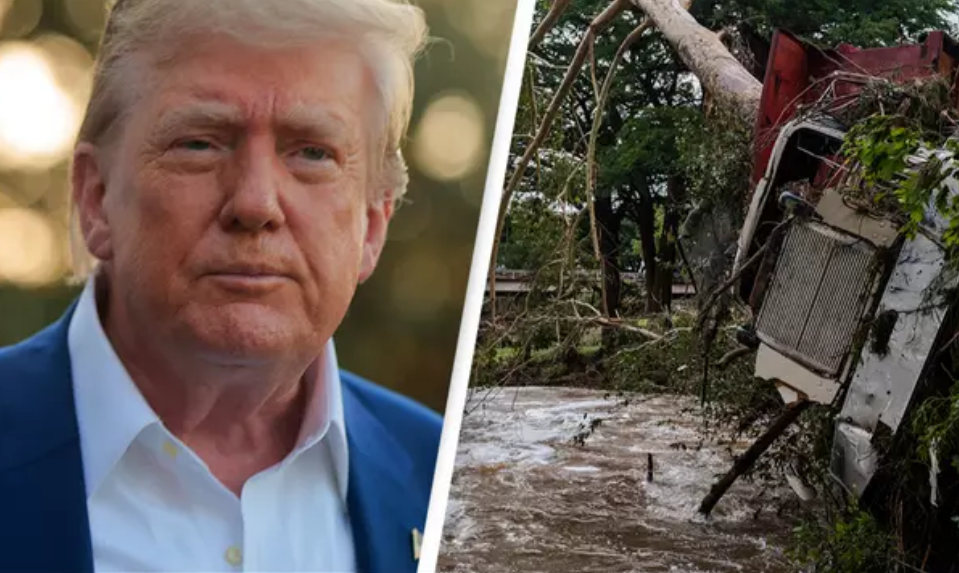
The catastrophic floods that struck central Texas over the July 4th weekend have now claimed the lives of at least 82 people, while 41 others remain missing, in what officials are calling one of the deadliest natural disasters in the state’s recent history. And as the search for the missing continues, questions are mounting about whether earlier warnings and better coordination could have saved lives.
A significant portion of the fatalities—68 deaths, including 28 children—have been confirmed in Kerr County, located in the hill country along the Edwards Plateau, according to Sheriff Larry Leitha. Among the missing are at least 10 girls and one counselor from Camp Mystic, a Christian summer camp located along the banks of the Guadalupe River.
“This tragedy has devastated us and our entire community,” Camp Mystic said in a statement. “Our hearts are broken alongside the families that are enduring this tragedy, and we share their hope and prayers.”
The rising waters overwhelmed neighborhoods, camps, and roads across central Texas, catching many residents off guard. Kerr County Judge Rob Kelly, when asked why vulnerable locations like Camp Mystic weren’t evacuated ahead of the rainfall, responded bluntly:
“I can’t answer that. I don’t know.”
Budget Cuts Under Scrutiny
In the aftermath, budget cuts made under President Donald Trump’s administration have come under renewed scrutiny. Some officials say those cuts hindered communication and coordination between federal agencies and local emergency managers, possibly delaying critical flood warnings.
According to The New York Times, unfilled positions at the National Weather Service (NWS) and the National Oceanic and Atmospheric Administration (NOAA)—resulting from aggressive cost-cutting by the Department of Government Efficiency (DOGE)—may have contributed to slower dissemination of warnings to first responders in Texas.
Tom Fahy, legislative director for the National Weather Service Employees Organization, said that the San Angelo NWS office was short three essential staff members, including a senior hydrologist, a staff forecaster, and a meteorologist-in-charge.
Nearby, the San Antonio NWS office was also reportedly understaffed, missing both a warning coordination meteorologist and a science operations officer. One of those key employees had taken early retirement on April 30 under a buyout program offered during Trump’s second term.
Although Fahy noted that some of these vacancies predate Trump’s return to office in January 2025, others say the ongoing trend of budget slashing has undermined critical infrastructure in weather preparedness.
Mixed Reactions to Forecast Accuracy
Despite the chaos, some former Weather Service officials have defended the performance of the forecasting teams, saying the alerts issued were “as good as could be expected” under the circumstances, given the unpredictable and fast-escalating nature of the storm.
Erica Grow Cei, a certified meteorologist speaking for the NWS, issued a heartfelt statement:
“The National Weather Service is heartbroken by the tragic loss of life. We remain fully committed to our mission to serve the American public through our forecasts and decision support services.”
Federal Response Underway
In response to the devastation, President Donald Trump, 78, signed a major disaster declaration for Kerr County on Sunday, July 9. He also activated federal emergency resources and announced plans to visit Texas in person on July 11.
“I would have done it today, but we’d just be in their way,” Trump told reporters. “It’s a horrible thing that took place, absolutely horrible.”
Texas Governor Greg Abbott assured the public that search and rescue operations are ongoing and pledged that new areas will be combed as the floodwaters gradually recede.
UNILAD has reached out to both the National Weather Service and the White House for further comment.