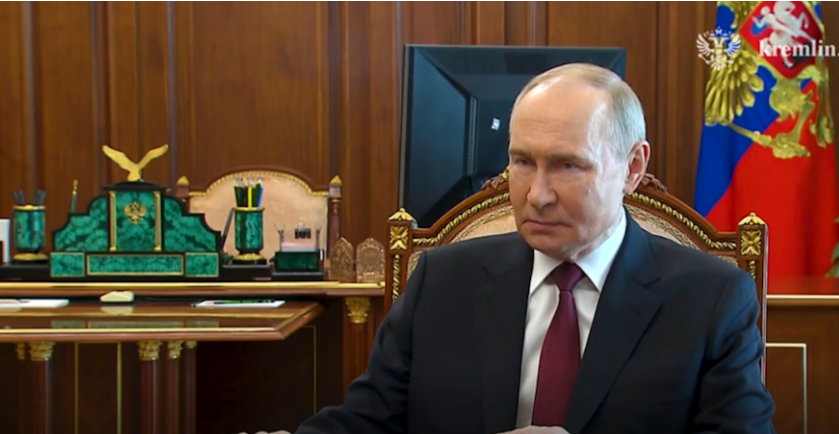
The abruptness. The poor timing. The lack of coordination. If Ukraine’s allies ever doubted Russia’s deep-rooted cynicism about peace, Vladimir Putin’s surprise Easter ceasefire announcement has erased those doubts.
Just hours after U.S. Secretary of State Marco Rubio and President Donald Trump publicly demanded immediate proof that the Kremlin was serious about ending the war, Putin dropped his so-called peace offering: a unilateral, last-minute call for a temporary ceasefire over the Orthodox Easter weekend.
To Moscow’s loyalists, the move may look like a gesture toward Trump. But for anyone watching closely, it’s clear this is less about peace and more about propaganda.
There was no coordination with Kyiv. No planning. No negotiations. Just a sudden order for all hostilities to stop — effective immediately. But in war, nothing happens immediately. Ukrainian troops entrenched in fierce fighting can’t just lay down their arms the moment Putin speaks. A ceasefire like this demands preparation, communication, and trust — none of which exist in this situation.
Confusion on the battlefield is inevitable. Soldiers won’t know whether to trust the silence, how to handle violations, or even when and how the truce ends. It’s a recipe for chaos, not peace.
And that may be the point.
Rather than a sincere step toward de-escalation, this truce appears carefully designed to set Ukraine up. When violations occur — and they almost certainly will — Putin can point the finger at Kyiv, reinforcing his narrative that Ukraine doesn’t want peace. Meanwhile, Washington may be tempted to see this as a goodwill gesture, despite evidence to the contrary.
This isn’t the first time Putin has pulled this trick. In January 2023, he called for a 36-hour ceasefire over Orthodox Christmas. Western leaders and Kyiv saw it for what it was — a strategic pause to regroup, not a genuine move toward ending the war.
Real ceasefires require dialogue. They require planning and consent from both sides. This? This is a PR stunt — a way to briefly shift the spotlight, satisfy international pressure, and trap Ukraine in a diplomatic game it didn’t ask to play.
As of Saturday night, Ukrainian officials reported that Russian shelling was still ongoing, proving once again that Kremlin declarations don’t always reflect Kremlin actions.
If anything, this stunt may do more harm than good. It undermines real diplomacy and fuels distrust in an already volatile situation. And while it might give Trump a talking point, it gives the rest of the world one more reason not to take Russia’s peace talk seriously.